Oscar Winner Tornatore Debuts Documentary on Brunello Cucinelli’s Humanistic Journey.
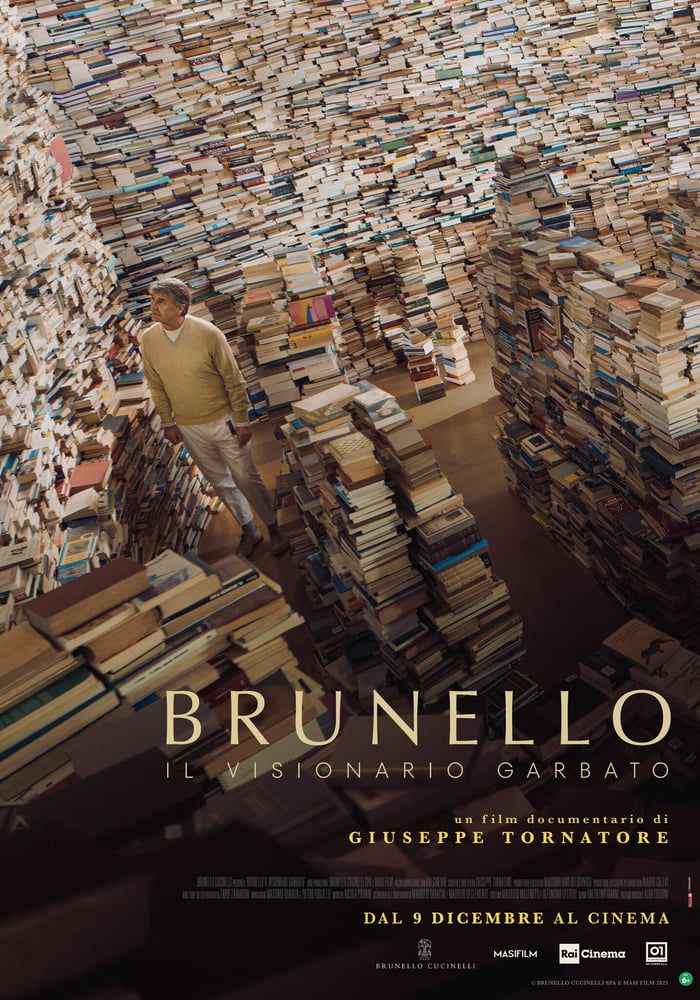
A blend of emotion and enchantment characterized the world premiere of the documentary film "Brunello, il Visionario Garbato," held in Rome on December 4. Directed by Oscar winner Giuseppe Tornatore and featuring a score by fellow Oscar winner Nicola Piovani, the event took place in the magical setting of Cinecittà. The film offers a deep dive into the life and philosophy of the Umbrian entrepreneur Brunello Cucinelli, retracing his journey from humble beginnings to establishing a globally recognized name synonymous with humanistic capitalism. The narrative weaves together documentary footage, personal recollections, and fictional elements to reveal a man driven by core values of fairness, dignity, and social justice.
Cucinelli, known for his philosophical approach to business, shared personal anecdotes from his childhood during the premiere. He recalled growing up in an isolated cottage with 13 family members, all sharecroppers, without running water, electricity, or heating. Despite the hardships of farm work, evenings were filled with conversation and smiles. "We children made up games out of nothing and had great fun in our simplicity," Cucinelli noted. This experience instilled in him an appreciation for simple pleasures and a connection to nature, which he still holds dear. He also credits his father with teaching him the importance of precision and beauty through simple tasks like plowing fields, emphasizing that "straight furrows are beautiful."
A pivotal moment in Cucinelli's life, detailed in the film, occurred during his family's move to the city in the 1960s. The culture shock of this transition, where modern comforts replaced the quiet simplicity of the countryside, proved challenging. The shift was particularly jarring for his father, who found work in a factory. Overhearing his father describe being "humiliated... treated like a beast, like a slave" in the factory environment served as a powerful catalyst for Cucinelli. It sparked a lifelong commitment to human dignity, inspiring him to promise himself, "I would like to try to work and live for human dignity." This ethos became the foundation of his entrepreneurial vision, transforming Solomeo into an emblem of a different kind of capitalism.
Cucinelli explained that his motivation for creating the film stemmed from a desire to share his story authentically. He wanted to ensure that "people would have a record of my actions, to hear the facts told in my own voice, while I am alive, for the sake of truth, not for glory." Given his deep love for cinema, particularly Tornatore's "Nuovo Cinema Paradiso," Cucinelli felt compelled to reach out to the director directly. The collaboration extended to Piovani for the score, creating a work Cucinelli describes as "a wonderful, perfectly judged score" that effectively captured his soul. The project, which took three years to complete, aims to invest in "great ideals we believe in: family, spirituality, religion, combining them with wisdom, equality and concord."
For Tornatore, the decision to take on the project came after a period of gradual immersion in Cucinelli's stories. The key creative spark for the director centered on Brunello’s lifelong passion for card games. Tornatore recognized that Cucinelli viewed card games not as a simple pastime or gambling, but rather as a rigorous mental exercise in logic and strategy, mirroring his approach to business. Tornatore conceived the idea of structuring the narrative "as if it were a card game," providing a unique framework for the storytelling. Despite Cucinelli’s strong presence, Tornatore noted that the entrepreneur "behaved as if he were dead," allowing the director complete creative freedom without interference.
The film itself features a blend of personal recollections from Cucinelli and dramatic reenactments of his youth, portrayed by actors Francesco Cannevale, Francesco Ferrone, and Saul Nanni. Cucinelli participates as an observer of his own life. The narrative is enriched by interviews with close family members, including his wife Federica and daughters Camilla and Carolina, as well as high-profile friends such as Patrick Dempsey and Oprah Winfrey, all sharing anecdotes and reflections. The story traces his early entrepreneurial successes, from founding the cashmere business to the growth of the company and his dedication to employee well-being and community development.
A central element of the film is Cucinelli's deep connection to Solomeo, his "place of the soul." The documentary highlights how Cucinelli conceived his business venture in the village where his wife lived, dreaming of restoring its half-ruined walls, church, and castle. This vision became reality, transforming the castle into the company headquarters. The film emphasizes that this dream was realized not only through determination and creative genius but also through faith and the unwavering support of his spiritual mentor, Don Alberto. Tornatore masterfully balances moments of powerful emotion with touches of irony and irreverence, lending greater warmth and dimensionality to Cucinelli's character.
The premiere event itself reflected Cucinelli's deep appreciation for history and philosophy. Following the screening, guests, including representatives from FashionNetwork, were invited to an unforgettable gala dinner within the spectacular Ancient Rome set at Cinecittà. A walkway illuminated by candles led guests through "ancient ruins," adorned with philosophical quotes from figures like Plato, Socrates, and Marcus Aurelius—all personal inspirations for Cucinelli. The space was further decorated with approximately 130,000 volumes, referencing the film poster and symbolizing the entrepreneur's profound love for literature and knowledge. While Brunello Cucinelli’s stature in the business world was already assured, this Tornatore masterpiece solidifies his legacy in cinematic memory.