Paris Fashion Week: Aprons, Regenerative Chic, and Alien Suits Dominate the Runway
As the fashion world turned its gaze to Paris, anticipating the latest from Chanel, three distinct designers captivated audiences with their innovative approaches. Miuccia Prada stirred conversation with her apron-centric collection at Miu Miu, Coperni unveiled a vision of regenerative chic, and Thom Browne delivered an otherworldly spectacle within the historic confines of Karl Lagerfeld’s former mansion.
Miuccia Prada, ever the maestro of unexpected narratives, once again defied expectations at Miu Miu. In a season frequently characterized by overt displays of luxury, Prada chose to celebrate women and the profound significance of their labor. Her collection was a poignant homage to the working woman, challenging conventional notions of opulence and glamour.
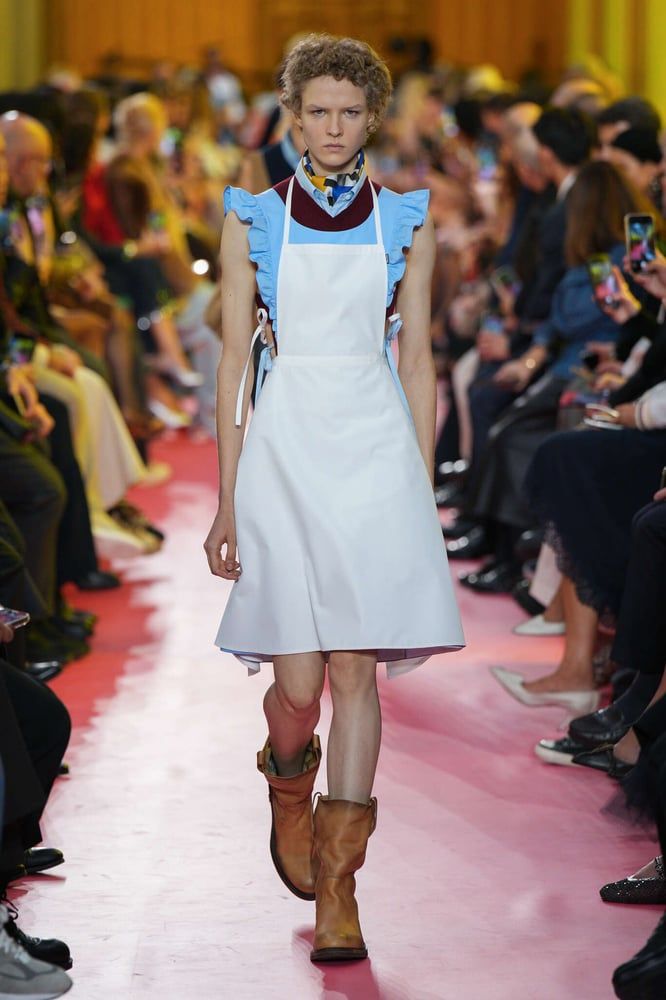
The undisputed star of the Miu Miu show was the apron, presented in a multitude of variations. Prada ingeniously transformed this humble garment into backless dresses, often paired with tea-towel bras or tiny tanks. Some aprons were embellished with studs and mini mirrors, while others were reduced to utilitarian carpenter’s aprons, reimagined as industrial cummerbunds. The collection opened with rough cotton aprons layered over coalminers' donkey jackets or scuffed leather jackets – a Miu Miu signature – styled with robust pants and heavy boots, evoking a distinct "factory floor fashion."
The mood subtly shifted, transitioning from housewife to housemaid with floral wrap dusting coats and house dresses adorned with charming prairie flower prints. The co-ed show saw actor Richard E. Grant embody a dandy foreman, marching in workers' pants, a cable knit jumper, and a leather apron. Other male models appeared in ruffled aprons crafted from distressed leather, reminiscent of an old Ford Zephyr's back seat. The cast's hair, frizzy and "brillo-like," drew inspiration from 1950s photographs of housewives in their quaint floral aprons.
Surrounded by a throng of mobile phone-wielding editors, Miuccia Prada articulated her vision: “Aprons are so deeply rooted in our history. An apron says you are working, which is already a good thing. The apron is my favorite piece of clothing in general. It contains the difficult life and pain of women in history - from factory to home. In fashion, we talk too much about glamor and rich people. But we must recognize that for most people life is very different, and difficult. It was the moment to address this.” This sentiment underscored a subtle yet potent theme of class struggle, further emphasized by guests sitting at tables arranged like a factory canteen, albeit with a playful "sauce" – semi-sheer aprons revealing glimpses of lingerie.
This provocative blend culminated in an all-black series made from transparent lace, drawing a clear parallel to Luis Buñuel’s "Diary of a Chambermaid," where Jeanne Moreau’s character enacts her revenge in a satirical anti-bourgeois classic. Miuccia, evidently pleased with her daring and unique ability to execute high-stakes runway concepts, smiled, remarking, “I put all my passion in this show, and I was really scared. But it seems to have gone well!” Following her stellar Prada show, this Miu Miu collection further cemented Miuccia Prada’s position as one of fashion's most influential designers today.
Coperni, meanwhile, marked another fashion first on Monday lunchtime in Paris, unveiling a collection centered on garments designed to nourish the skin. Pioneers of regenerative fashion, designers Sébastien Meyer and Arnaud Vaillant presented a capsule of three looks crafted from stretch fabrics infused with prebiotics and probiotics. This 100% bio-based matrix actively repairs and aids skin, forming the core of their "Coperni C+" capsule, developed in collaboration with HeiQ skin care. These innovative leggings, tops, and tanks formed the basis of a cool and precise collection, elegantly staged within the Pompidou Center.
Renowned for their theatrical presentations, from spray-painting Bella Hadid live to featuring robotic dogs, Meyer and Vaillant this season focused on the idea that "fashion should nourish women too," as a visibly moved Meyer explained backstage. Beyond their groundbreaking regenerative pieces, the collection featured slimline technical track jackets with distinctive priestly collars, windcheaters ingeniously inverted into mini cocoon skirts, and impeccably tailored mannish blazers paired with hotpants. Models showcased impressive rawhide biker jackets, which were surprisingly produced from mushroom leather, alongside dramatic new long skirts boasting double-front zips that revealed ample leg.
The cast moved dynamically around a circular set, their feet adorned with "sticky-socks" and innovative sandals that appeared to have bio-morphically grown onto their feet. Accessories also embraced the theme of wellness, with amulets, earrings, pendants, and even a bag crafted from jade or lapis lazuli. Most models sported ergonomic belts and mobile phone carriers, enhancing the impression of busy career women en route to the gym or work, a notion underscored by Kate Bush’s soulful "This Woman’s Work" on the soundtrack. With hair slicked back and twisted into small spikes, the cast radiated a sense of confidence, reflecting the spruce, chic, sporty, and often beautiful aesthetic of the clothes. This excellent collection served as a salutary lesson in the benefits of self-editing and disciplined design.
Finally, Thom Browne transported his audience to an otherworldly realm, proclaiming, "The aliens are coming, the aliens are coming," as his extraterrestrial vision landed in Karl Lagerfeld’s former residence. The show commenced with the iconic theme music from "Close Encounters of a Third Kind" and concluded with the beloved Dr. Who theme. The inaugural model, adorned with an extraterrestrial green head, sported one of Browne’s signature gray flannel suits, dramatically reinterpreted with six sleeves and as many legs.
Browne’s aesthetic, famously rooted in the retro gray corporate suit, was once again masterfully exploited. This season saw him craft exquisite mini jackets in a variety of fabrics he clearly developed with immense care and passion: degradé sapphire tweed, mint green cotton stripes, and pale gray seersucker. He playfully incorporated his classic broad four-stripe logo, transforming what resembled knee socks and boxing boots into striking new suede boots. The designer’s fondness for cricket themes persisted, evidenced in fine county cricket blazers and beautifully intricate intarsia sweaters.
Browne embraced an "overdrive" approach, with each model carrying tiny panels fitted with LEDs displaying their look number. Layering was executed with joyous abandon, presenting white shirts, club ties, petite jackets, coats, or varsity jackets – all seamlessly integrated into a single ensemble. In Thom Browne’s world, "too much is never too much," a philosophy met with loud applause at the finale. As guests departed, they encountered two "Twilight Zone"-suited models positioned on a podium in the 17th-century courtyard, vigilantly guarded by three extraterrestrials. It’s a spectacle that one suspects Karl Lagerfeld himself would have thoroughly appreciated.