Paris Fashion Week Day Five: Freshness Blooms and Provocation Ignites
Paris Fashion Week unfolded its fifth day with an exceptionally dense programme, spotlighting the Spring/Summer 2026 womenswear ready-to-wear collections. A prominent theme emerging from many designers was a distinct pursuit of freshness and lightness, beautifully exemplified by Leonard Paris and Giambattista Valli. In stark contrast, Vetements opted for a provocative and challenging approach to its presentation.
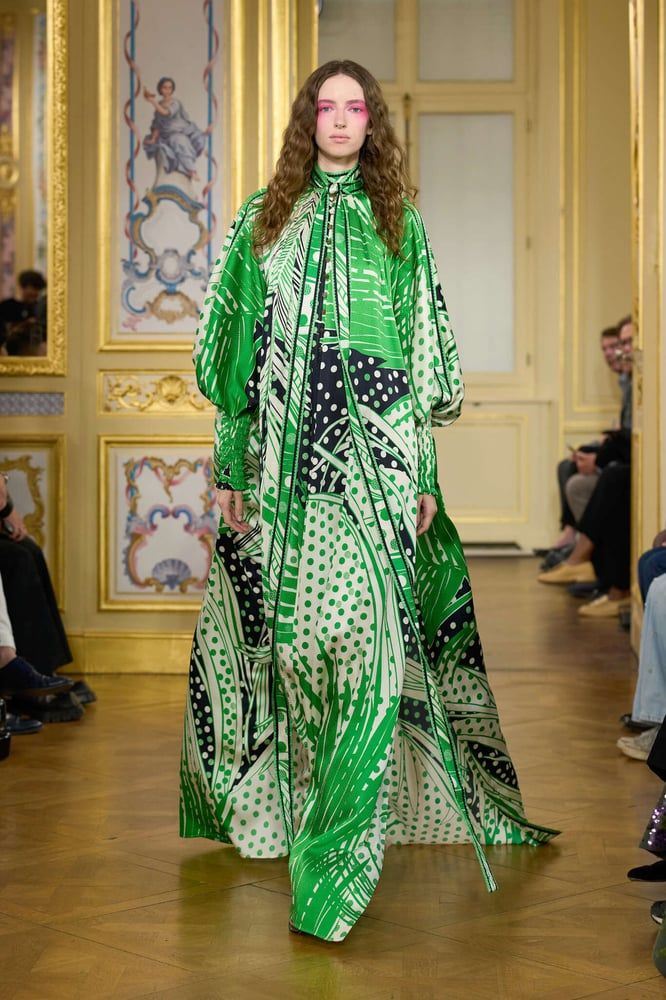
Leonard Paris embarked on a stylistic journey to California, drawing inspiration from the glamour of Hollywood and Beverly Hills to craft a collection for a summer promising to be vibrant and intense. German designer Georg Lux's vision leaned heavily into sophisticated evening and cocktail wear. This included fluid minidresses and long, diaphanous gowns, meticulously cut from airy silks that appeared to float and ripple with every movement, creating a sensation of intangible fabrics whispering through the air.
Backstage, at the elegant private mansion in the 16th arrondissement that has housed the brand since 2018, Creative Director Georg Lux revealed his muses for the season: icons like Faye Dunaway and Jerry Hall, alongside the vibrant drawings of Puerto Rican fashion illustrator Antonio Lopez. The collection masterfully fused the allure of the seventies jet set with the timeless elegance of Hollywood's golden age, featuring draped, sequinned gowns fit for a true diva.
Prints were central to Leonard's narrative, taking centre stage with a rich variety. These ranged from Californian palms, revitalized from the house's 1980s archives, to an Art Deco floral theme that originated in the 1970s. A fresh red-and-orange poppy motif made its debut, adorning cotton-poplin dresses, painted onto a jacket, showcased on a transparent recycled-plastic bag, and even incorporated into enamelled metal earrings. Across the collection, flowers in every conceivable shape and shade blossomed, enriching its diverse tapestry.
Volume defined the silhouette for the upcoming summer season at Leonard Paris, with prominent draping, generous balloon sleeves, puffed forms, and gracefully flared dresses. Providing a chic contrast were a few "cricket club"-inspired striped ensembles and tailored masculine blazers and suits. These contrasting pieces, however, retained an undeniable glamour, crafted from greige twill intricately embroidered with gold sequins and rhinestones.
Giambattista Valli welcomed guests into the intimate salons of his house, located just a stone's throw from the Opéra on Boulevard des Capucines. The catwalk was lined with baskets overflowing with fresh fruit and wildflowers, immediately setting a tone of natural splendour and ingenuous candour that permeated the Italian couturier’s collection, celebrating nature in its most pristine form.
The models evoked a romanticized image of peasant women returning from the fields or shepherdesses from classic tales, adorned with colourful headscarves, voluminous blouses, ample petticoats or culottes, and delicate white lace apron dresses. Many outfits were strewn with charming bucolic motifs: an abundance of flowers, artfully arranged bouquets, ripe fruits, lucky clovers, and fluttering butterflies.
Natural materials such as linen and cotton were predominant, imbuing the collection with an authentic simplicity. These fabrics formed the basis for whimsical little dresses, chic jackets, and smart shorts suits, all decorated with hand-painted flowers in a style reminiscent of Dutch masters like Vermeer, whose still lifes were a key inspiration for Giambattista Valli this season.
Ruffles proliferated, cascading like petals on delicate dresses that featured billowing, airy volumes. These designs burst with the vibrant colours of summer fruits: luscious peach, rich raspberry, zesty lemon, sweet cherry, ripe strawberry, and deep plum. Lightness was paramount, achieved through the use of iridescent shot taffeta and, notably, various forms of organza—from finely embroidered cotton organza to softly ruched silk organza and intriguing crinkled iterations.
After their memorable McDonald’s takeover on the Champs-Elysées in June 2019, Vetements made a striking return to the world's most beautiful avenue, this time occupying a stark concrete basement, formerly an Adidas store. In the dim light, a lone silhouette descended stairs into what resembled a squalid garage, its ceiling crisscrossed with neon tubes. The first model, her face masked by a nylon stocking, emerged in leather trousers and boots, sporting a white T-shirt emblazoned with a swastika crossed out by a prohibition sign, aiming to make an immediate, provocative statement.
The brand, returning to the catwalks after a season's absence, clearly sought to create a significant impact. However, the message delivered was, to say the least, muddled. Following the provocative opening manifesto look, the show quickly veered into what many observers found to be a sexist spectacle. All women models were systematically undressed at the back as they walked, a treatment not extended to the men, save for one instance where a male model's jeans became transparent plastic at the rear, discreetly revealing white boxer shorts.
While fashion frequently explores front/back garment construction, Vetements' experimentation left many observers unconvinced. Whether it was slip dresses, a tight skirt with a T-shirt, a suit, a printed dress, a severe straight grey skirt, or even a candy-pink ballgown, viewed from behind, the women were often reduced to hypersexualized figures—mere "sex bombs" with buttocks and legs prominently displayed, covered only by couture tights and sometimes tight shorts or thigh-high boots.
From the rear, garments dramatically morphed into high-cut bodysuits, long dresses were abruptly shortened, and skirts either appeared merely tacked at the front without being properly worn or were systematically unbuttoned at the back. Even the classic tweed suit was subverted, its skirt replaced by high-cut tweed briefs. Elsewhere, trench coats and overcoats were open at the back or stripped of fabric, exposing their linings, a detail also seen on certain men's jackets.
Two particular looks, featuring an enormous cushion—resembling an airbag—strapped to the front at pelvis level, raised significant questions. The show concluded with a dramatic *coup de théâtre*: a final model, dressed in an elegant black crinoline gown entirely open at the back, crossed the catwalk visibly in tears, appearing to buckle under pain. This ambiguous finale left the audience pondering the intended message: was it a denunciation of women as objects, of their hypersexualized image, or perhaps of the excesses of social media?
By striving excessively for conceptual depth, Guram Gvasalia, who took over as the brand’s creative director in 2021 (succeeding his brother Demna, now at the helm of Gucci after Balenciaga), risks alienating his audience and losing the brand's core identity in a haze of overthought provocation.