Paris Fashion Week Dazzles with Diverse Visions from Alaïa to Westwood
Saturday at Paris Fashion Week was a whirlwind of diverse fashion statements, navigating downpours and traffic snarls to present a quartet of truly distinctive shows. From the epic grandeur of Alaïa and the disquieting narrative of Maison Margiela to the uber-equestrian world of Hermès and the boudoir-driven flair of Vivienne Westwood, the day offered a rich tapestry of creativity.
The Alaïa show, under the direction of Pieter Mulier, demonstrated remarkable synergy by taking place at the Fondation Cartier, a fellow Richemont-owned brand. The result was a spectacle of pure beauty. Staged on an LED-paneled ground floor within the Jean Nouvel-designed foundation, the models walked across magnificent images of feminine beauty, with close-ups of faces magnified to the size of squash courts. A mirrored ceiling further amplified the drama, creating what Mulier described as "a cocoon of imagery."
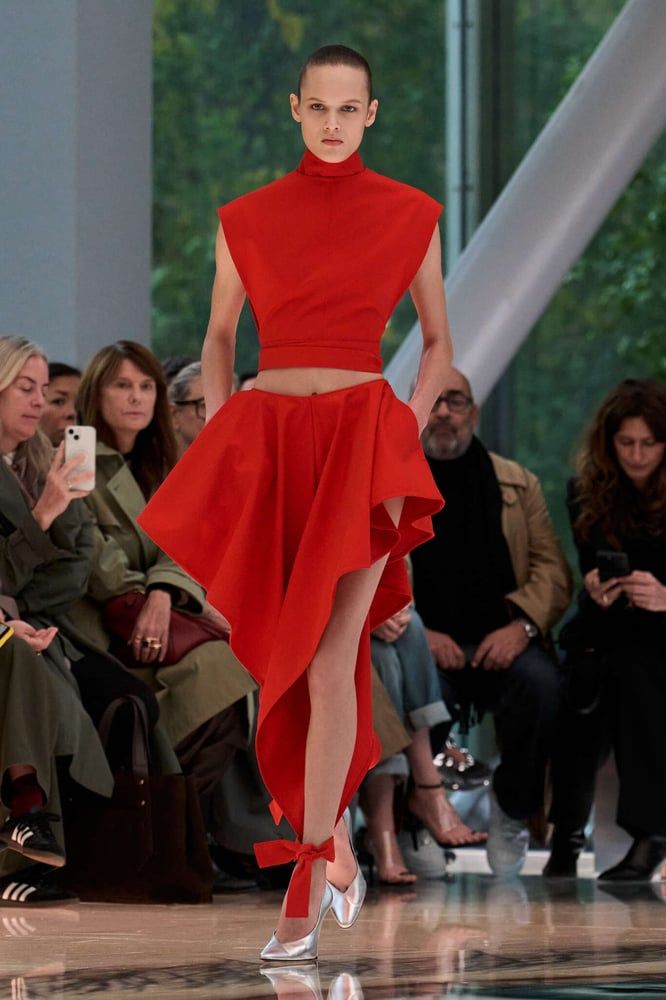
Mulier masterfully riffed on Alaïa's DNA of sexy empowerment. His collection featured sleek cocktail dresses crafted from technical fibers, silk, or ribbed knits, punctuated by transparent breastplates and flawlessly executed diagonal fringes. Strict lizard-skin cloaks and tunics showcased his draping prowess, particularly a series of stunning V-shape skirts in layers of cotton and silk jersey. A black leather perfecto with displaced shoulders that seamlessly morphed into a grand gown felt like a direct homage to founder Azzedine Alaïa's spirit. Mulier emphasized his aesthetic as "sexy, but always very simple and precise," even as he embraced risk with pieces like hanging fringe pants paired with surgeon’s smocks, and conceptual cotton coats that were short in the front and ankle-grazing in the back. While some designs, like dresses that tied around the ankle or jerseys that restrained the arms, occasionally verged on overthinking, the collection was a memorable moment in fashion, underscoring Richemont’s thriving fashion division.
Glenn Martens’ ready-to-wear debut for Maison Margiela continued his exploration of unsettling imagery, following his couture show where models wore masks. This season, models’ mouths were forcibly kept open by braces, creating a "Silence of the Lambs"-esque effect that felt bewilderingly heavy-handed amid a climate of suppressed free speech. This discordant mood was strangely juxtaposed with a live children’s orchestra, performing classic works by Bizet, Tchaikovsky, and Prokofiev, occasionally out of tune, on an all-white stage. Despite the controversial staging, Martens delivered a very strong, at times brilliant, collection, especially in tailoring.
His designs included a novel tuxedo waistcoat, superb blazers, and dusters with dropped waistlines. Lapel-free denim jackets and coolly twisted jeans with exposed drawstrings were standout pieces, echoed in similar versions of lived-in rawhide. Martens also presented a quintessentially Margiela moment with slip dresses finished with mock silver gaffer tape. He ingeniously "declined" an idea from his July couture debut, reinterpreting 16th-century floral prints into beguilingly punchy dresses and cocktails. However, the lasting impression of the show remained the striking imagery of the models' mouths.
At Hermès, Nadège Vanhee remained deeply committed to the brand’s equestrian DNA, ensuring that equine motifs informed every single look. Staged elegantly inside the riding center of the Garde Républicaine, the show celebrated the horse, often referred to as Hermès' "first client." Vanhee’s key fabric was the finest matelassé and quilted leather, inspired by horse blankets, notably used in seductive tops, corsets, and superb wrap skirts. This collection marked a notably body-conscious turn for Hermès, featuring waxed leather sheaths in black and beige, paired with riding boots, as models prowled seductively on a runway speckled with seashells.
Drawing inspiration from a Camargue saddle and Provencal motifs, Vanhee presented a series of boleros and urban hacking jackets, all finished with silver steel clasps, horse-bits, mini stirrups, and leather reins. While the strict silhouettes and revealing elements like hotpants—a surprising addition for Hermès—imbued the collection with a racy sensibility, some interpretations felt a tad too literal or provincial. Nadège Vanhee is a talented designer with a substantial body of work for Hermès, yet this season, it appeared she might have been trying a little too hard to project coolness.
Vivienne Westwood, a British fashion house deeply cherished in France, concluded the day with an epic afternoon show. Unveiled within the hallowed halls of the Institut de France, a sanctuary for the nation's greatest minds, the collection was a testament to the enduring legacy of the brand. Andreas Kronthaler, Vivienne’s successor and former husband, presented his strongest collection to date, entitled "Boudoir." It masterfully blended elements of lingerie, pajamas, pampering, voluptuousness, and naughtiness into a spectacular display. Rich Italian jacquards and damasks, alongside curtain materials, exploded in a riot of color, forming superb gowns that perfectly melded historicism with contemporary hipness.
The co-ed show saw men confidently strutting in micro togs, topped by shards of contrasting silk in leopard print, tie-dye, and tartan. One "disco dragoon" captivated in a check three-piece suit featuring mini shorts and perforated pirate boots. Both men and women sported sleek silk double-breasted suits, including the one worn by Andreas himself for his bow. With Paris and Nicky Hilton gracing the front row, Kronthaler delivered a truly memorable finale: Heidi Klum, in an ironic nod to her Victoria's Secret era, appeared sensational as a Restoration-era femme fatale in a crystal-encrusted white leotard, garters, and a cloud of taffeta. Kronthaler, holding a five-foot-long bouquet of sunflowers, garnered immense applause as he took his bow with Klum, before leading the entire cast to pose together on the steps of the Institut amidst thunderous cheers.