Paris Fashion Week's Final Sunday Delivers Bold Statements from Pasqualetti, Chloé, and McQueen
As Paris Fashion Week for womenswear draws to a close, it continues to deliver remarkable surprises, particularly evident on a recent Sunday that showcased three designers whose Spring/Summer 2026 collections were as inventive as they were distinct. Niccolò Pasqualetti, Chloé, and McQueen each unveiled particularly alluring lines, marked by an unbridled surge of creativity that captivated onlookers.
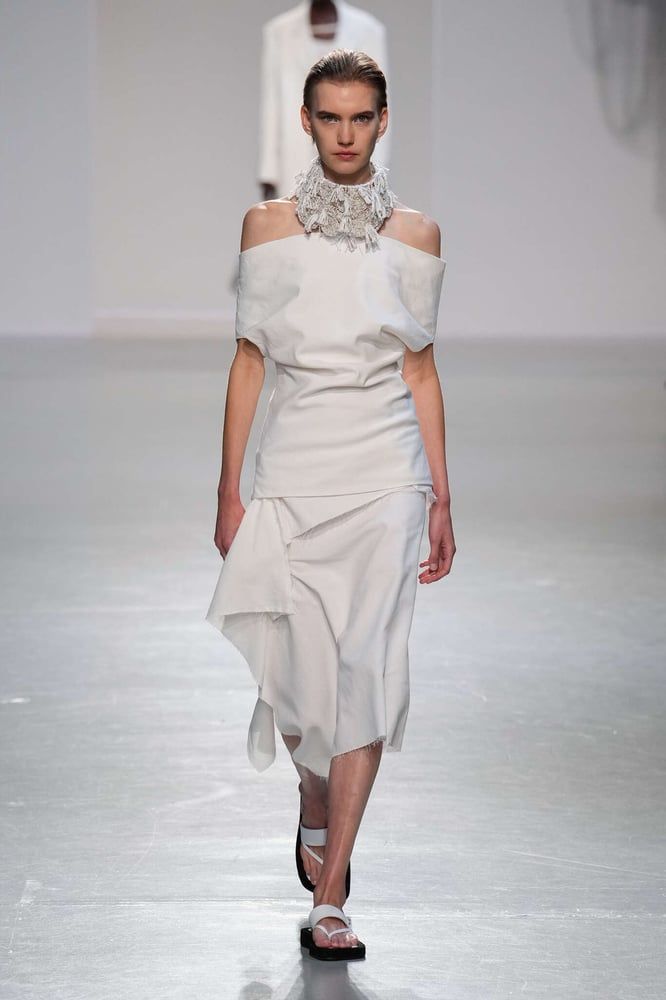
Niccolò Pasqualetti once again distinguished himself with an exceptional command of cut and an innate ability to render the most intricate constructions seemingly effortless. His collection exuded an elegant rigor, punctuated by precious details, achieving a sophisticated equilibrium between structured tailoring and fluid movement, negative space and abundance, substantial materials and transparency, and sharp lines softened with gentle curves. The palette skillfully blended neutral hues with subtle shimmer. Models, styled as modern-day vestals in head-to-toe white, moved gracefully in tunics, loose trousers, and longline ensembles featuring cuts that were both austere and strikingly original. Raw-edged cotton panels, draped directly onto the body, subtly bared the shoulders, while simple squares, joined with minimal stitching, formed innovative blouses, dresses, and cut-out skirts. The collection also featured liquid-look, sequined sarong-style skirts positioned over the hips of asymmetric swimsuits, showcasing clever two-in-one designs. A T-shirt, cut like a bodysuit in white cotton or black leather, presented as an inverted jacket from the back, creating a deep neckline between its lapels, into which an eye-catching chain necklace plunged. Leather was prominent in substantial jackets with removable, interchangeable sleeves, as well as in elegant dresses and skirts. It was also intricately worked into fine braids adorned with charms on select chic dresses and jackets. Metallic accents made their presence felt through details like a massive safety pin, serving either as a back belt on a trench coat or as a unique bag handle, and a delicate shamrock-patterned chainmail bralette.
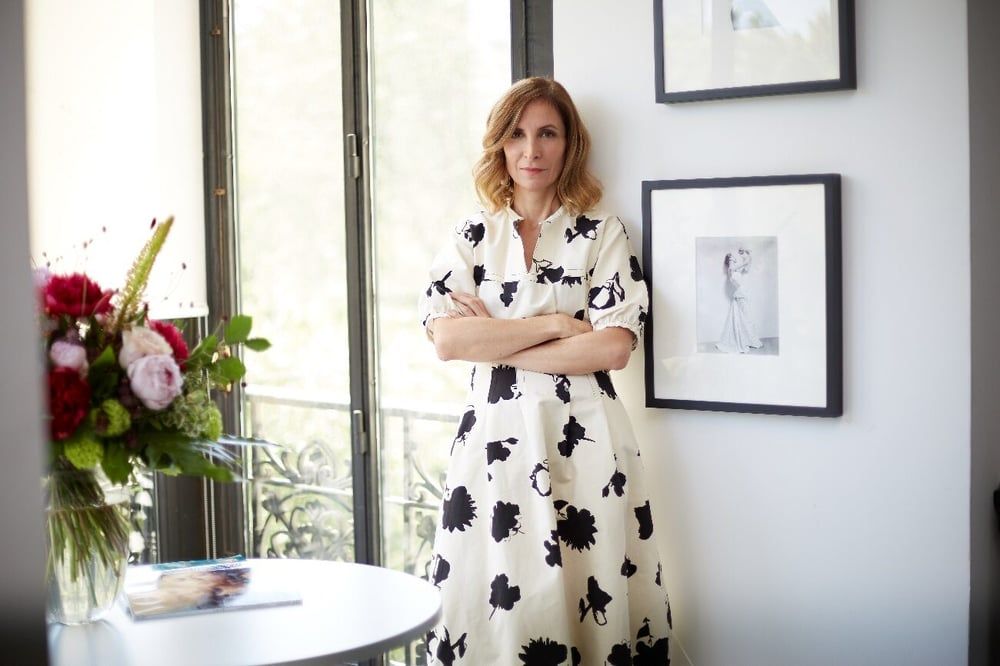
At Chloé, the ambiance was undeniably chic and springlike, characterized by an exuberant display of floral prints in every imaginable color and motif. Designer Chemena Kamali masterfully unrolled meters of poplin, drawing from an extraordinary archive of variegated fabrics to drape with an unrestrained freedom. No design element seemed off-limits, with the collection encompassing cocktail dresses featuring oversized bows, skirts with basques and playful ruffles, peasant dresses adorned with gathers, ruffles, or smocking, delicate floaty blouses, and dramatic balloon sleeves. The overall effect was striking, marking a distinct pivot from her earlier collections, which were known for their diaphanous delicacy, towards a bolder, more flamboyant direction this season. This flamboyance strongly echoed the 1980s, an impression amplified by specific looks such as tapered trousers paired with brightly colored, chunky-knit boat-neck jumpers, elegantly draped leather skirts, and collarless, buttoned jackets with pronounced shoulders, cinched at the waist with thick leather ribbons tied into large bows. The wardrobe was completed by ample, airy raincoats in monochrome camel, grey, or soft pastels, some artfully drawn into gathers just above the knee to create voluminous ballooning effects. Kamali articulated her creative intent, stating, "I wanted to explore what the idea of couture means in the context of Chloé. A paradox for a house founded on the principles of democratic freedom and ease; something that is not part of the core of its DNA." She further added her ambition to guide the brand "into new, unexplored territory by asking why and how Gaby Aghion founded Chloé."
The McQueen show underscored a period of significant transition, with Kering's new boss, Luca de Meo, taking his place in the front row, succeeding François-Henri Pinault. This shift mirrored the creative passing of the baton over recent seasons, from Sarah Burton, who departed for Givenchy, to the young Irish designer Seán McGirr, who assumed the role in September 2023. McGirr's collection drew deeply from the provocative, often tormented heritage of Alexander McQueen, while also integrating the refined technicality synonymous with Sarah Burton's tenure. The resulting collection traversed diverse registers, from a military aesthetic to decadent aristocracy and a hyper-sexy boudoir sensibility. McGirr's approach was bold, wielding scissors like a sabre to create deliberate box-cutter slashes across garments. Notably, these slashes, particularly at the lower back, revealed the upper curve of the buttocks and prominently featured a golden, jeweled thong. Knitwear also incorporated open backs, as did trousers, which split with large vertical zips along each leg. The waistline was often dropped, as seen in skirts, further exposing the top of the buttocks. Beyond the classic dolman jacket, hussar-style detailing emerged on navy blazers adorned with gold-fringed epaulettes and was diagonally traced across T-shirts. Gold trimmings were also intricately set into tapestry-fabric miniskirts and jackets. The corset was a pervasive element, encircling the torso in a figure-hugging bustier top paired with voluminous shorts, or appearing as a lingerie-effect dress. It was even seamlessly fused into cotton dresses. For evening wear, the collection offered a compelling choice of floaty parachute dresses, shimmering, garlanded looks, and dramatic fringed outfits crafted from strips of leather.