Portugal's Footwear Future: Innovation and Investment Challenge Asian Dominance
Portugal continues to solidify its position as a significant player in the global footwear market, having exported an impressive 68 million pairs of shoes to 170 countries in 2024. Despite being Europe's second-largest footwear producer, trailing only Italy and ahead of Spain, the sector faces a significant challenge: the overwhelming majority of global annual production, estimated at 90% of 24 billion pairs, remains concentrated in Asia. This situation is a primary concern for the Portuguese footwear industry, which is actively seeking to address it through strategic investment and continuous innovation.
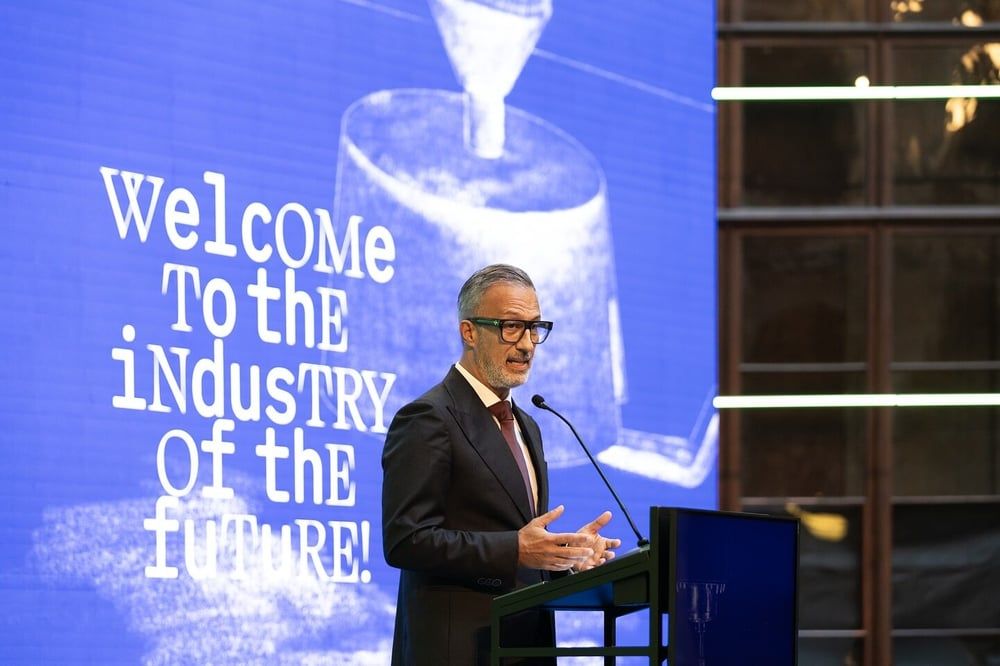
This critical issue, alongside the broader challenges and opportunities presented by technological, economic, and environmental transformations, was the central theme of the "Welcome to the Industry of the Future" conference. Organized by APICCAPS (Portuguese Association of Footwear, Components, Leather Goods and Related Products Manufacturers) and the Portuguese Footwear Technology Centre, the event took place on November 18 and 19 at the Palácio da Bolsa in Porto, bringing together industry experts to discuss the future trajectory of the sector.
During the opening session, Luís Onofre, president of APICCAPS, articulated the industry's vision for change. He described the current mass-production model in Asia as "unsustainable" but expressed strong optimism for an alternative. Onofre affirmed that Portugal possesses the "knowledge, creativity, tradition and technology to put forward a credible and competitive alternative to the mass-production model," underscoring the nation's clear ambition to redefine its role in the global footwear landscape.
A concrete manifestation of this ambition within the national footwear cluster is the substantial investment of 120 million euros over the past three years. This unprecedented funding has been strategically directed towards automation, robotics, and sustainability initiatives, marking what Luís Onofre hails as "the largest investment cycle in the footwear sector in Portugal." This investment is considered a "decisive step" towards transforming the Portuguese industry into one of the most modern globally.
The investment is primarily channeled into two pivotal ongoing projects. The BioShoes4All project, with a budget of 60 million euros, is dedicated to the development of more sustainable materials, products, and processes, a commitment that was highlighted at MICAM in Milan in September. Concurrently, 50 million euros are being invested under the FAIST (Agile, Intelligent, Sustainable, and Technological Factory) project, focusing on advanced automation, robotics, and sustainability measures within manufacturing.
Florbela Silva, coordinator of the FAIST project, emphasized the dynamic nature of the market during her presentation at the conference. She explained to FashionNetwork.com, "The market is evolving and we have to keep pace with this change, both in terms of how we produce and in the development of new products. Because it doesn’t matter how sustainable, how modern or how agile we are if our product doesn’t sell." Silva further stressed the imperative for continuous innovation, stating, "We must constantly innovate and modernise to keep up with the evolution of the world and the consumer."
Adding an international perspective, Sofia Moreira de Sousa, the European Commission’s representative in Portugal, praised the Portuguese footwear industry as "a clear example of how strategic participation and the capacity to adapt can turn challenges into competitive advantage." She underscored that automation, advanced robotics, artificial intelligence, and evolving consumer models are areas poised to "redefine Europe’s role in global value chains." The European Commission, she noted, prioritizes supporting the industry to become "more aware, more digital and more sustainable."
Concluding the conference, Rosana Perán, president of the CEC – European Confederation of the Footwear Industry, reiterated a crucial message: "Europe cannot just be a consumer market." She underscored the importance of leveraging technology to serve people and highlighted the significant strides made by the FAIST project, affirming that such progress does not necessitate forgetting tradition. This sentiment encapsulates the Portuguese footwear industry's balanced approach, striving for modernity and innovation while valuing its rich heritage and expertise.