Primark's Gran Vía Gamble: A Decade of Economic Transformation and Retail Revolution
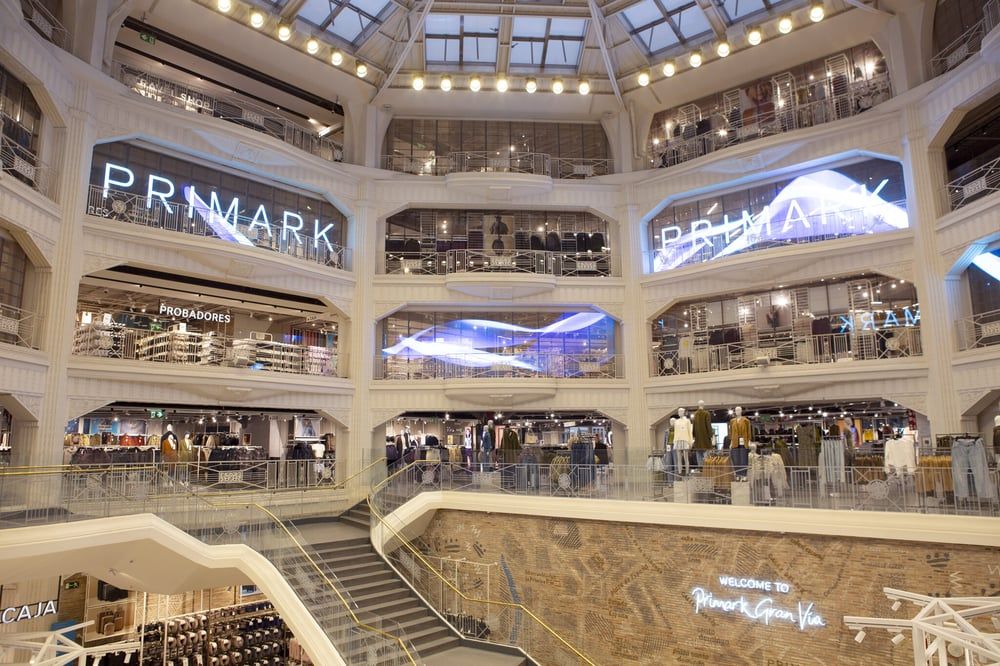
In a significant strategic shift in 2015, while the retail sector was still grappling with the lingering effects of the early 2000s economic crisis, Irish low-cost fashion giant Primark made a bold move. Departing from its customary presence within Spanish shopping centres, the brand established its flagship store at 32 Gran Vía in Madrid. This iconic location, a century-old building that once housed the pioneering Madrid-Paris department store, immediately captivated the public, with queues of eager customers a regular sight for months after its opening. A decade on, Primark is now evaluating the profound impact this landmark store has had on both Madrid's urban landscape and its economy.
The findings of this evaluation were presented on Tuesday, October 21, at the Gran Vía store itself, which also serves as Primark's Spanish headquarters. A report titled "10 years in the heart of Madrid," commissioned by Primark and prepared by economic consultancy Afi, revealed impressive figures. For 2024, the sprawling 12,500 square-metre Gran Vía store achieved a record economic impact, contributing a substantial 83 million euros to Spain's national GDP, encompassing direct operations and supply chain activities. Additionally, it generated a further 42 million euros in taxes and social contributions. Annually, this flagship store facilitates over five million transactions and directly employs 1,060 individuals.
Beyond its direct operations, Primark's influence extends significantly into the broader Madrid economy. The Afi report indicates that for every direct job created by the Gran Vía store, an additional 0.4 indirect and induced jobs are generated within the Madrid labour market. Furthermore, for every euro of value Primark generates through its operations, other businesses and sectors contribute an extra 0.5 euros to the local economy, underscoring its catalytic effect.
The consultancy also highlighted a pronounced "halo effect" along Gran Vía, transforming the capital's commercial axis. Since Primark's arrival in 2015, and looking towards 2025, the number of retailers in the area has surged from 101 to 186, while restaurants have nearly doubled, increasing from 46 to 90. Carlos Inácio, managing director of Primark Iberia, remarked at the report's presentation, "Ten years ago, when we decided to open here, we wanted to make a difference, to change the perception of the brand and elevate it. We wanted to convey a message to the Spanish consumer and we have succeeded, as well as helping to boost the dynamism of Gran Vía. This store, which leads Iberia by volume and transactions, has changed us as a brand."
The strategic boldness of the move was further discussed during a roundtable, where Diego Vizcaíno, Managing Partner of Afi, emphasized that the store's opening represented "a challenge for the city as a whole and for the companies that work with Primark." He added, "It was a challenge for the evolution of Madrid’s retail fabric; competitors had to raise their game, as did suppliers." The Gran Vía store operates on a unique 24/7 basis, albeit not all hours are trading hours. Juana Rodero, Primark’s director of people and culture, described the nightly replenishment as akin to "setting up a new store every day" for the night shift workers. The sheer scale of operations involves 1,500 lorries being unloaded annually, translating into approximately 50,000 unloading hours and over one million boxes of merchandise.
"I think transformation is the word that defines these 10 years," concluded Carlos Inácio. He articulated the brand's trajectory: "We arrived, we set trends and the challenge is to stay on that path. We have the responsibility to keep building a dynamic and inclusive business that continues to grow." Addressing one of the most frequently asked questions about Primark's future strategy – its stance on online sales – Inácio clarified, "We are not ruling out anything; what we are doing is studying and analysing the channel to launch it when we are certain that it will work." He noted that the company currently offers a 'click-and-collect' service in the UK and is actively analyzing its profitability and scalability to other territories, including Spain, which stands as Primark's second-largest market.
Primark has been an active presence in Spain since 2006. Today, the brand boasts 67 stores across the country, encompassing 250,000 square metres of retail space and employing over 10,000 people. Looking ahead, Inácio enthusiastically stated, "Next year we will mark two decades in the country and we will celebrate it in style," signaling continued commitment and growth in the Spanish market.