Primark's US Surge: Trade Policy Shift Fuels Brick-and-Mortar Boom
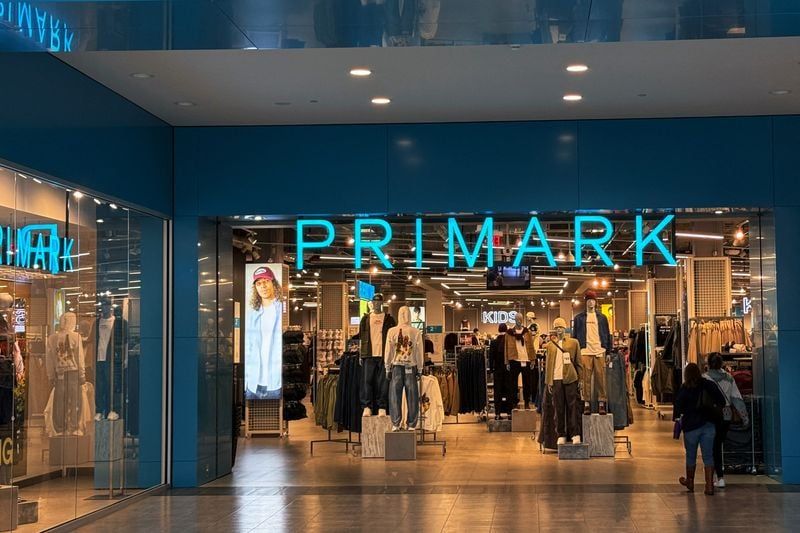
Primark is significantly ramping up its presence in the United States, aggressively expanding its store footprint and boosting marketing efforts. This strategic acceleration comes as the budget fashion retailer anticipates a shift in consumer behavior, driven by recent changes in US trade policy that are expected to steer value-conscious shoppers away from online competitors and back to physical retail locations.
A key factor in Primark's renewed US push is the Trump administration's May decision to terminate the "de minimis" duty-free treatment for online goods valued under $800, previously applicable to parcels from China. This policy reversal specifically impacts online fast-fashion giants like Shein and Temu, which directly ship products from Chinese factories to American consumers. The change has compelled these platforms to raise their US prices, thereby leveling the competitive landscape in favor of retailers like Primark, which import goods in bulk to US warehouses and sell through brick-and-mortar stores. While Primark has also seen price increases due to broader tariff hikes, it now enjoys a more competitive edge against online rivals who are facing duties on their products for the first time.
As the flagship brand of the London-listed Associated British Foods, Primark operates 475 stores across 18 countries, generating nearly £10 billion ($13.4 billion) in annual sales and over £1 billion in profit. Notably, Primark maintains a strict no-home-delivery policy, asserting that the high fulfillment costs would make it financially unviable given its low price points, though it does offer online viewing of ranges and Click & Collect services in Britain. Having cultivated a strong customer base in Europe, Primark is now keen to penetrate the US market, confident that its focus on budget-friendly fashion positions it for success where other less differentiated UK retailers, such as Tesco, Marks & Spencer, and Topshop, have faltered. The US currently accounts for roughly 5% of Primark's global sales.
Since its US debut in Boston in 2015, Primark has grown to 33 locations across 13 states, supported by distribution hubs in Pennsylvania and Florida. Recognizing a lack of brand awareness, AB Foods CEO George Weston highlighted the logical next step: increasing communications weight. Data from Sensor Tower confirms this, showing Primark's digital ad spending surged by an average of 175% between April and September compared to March, continuing to rise monthly. Similarly, visits to Primark's US website jumped 67.9% year-on-year from January to September, according to Semrush. In stark contrast, Shein cut its US ad spending in Q2 before a slight recovery, while Temu's spend plummeted by 90% and 70% in Q2 and Q3, respectively, as per Sensor Tower data. Bolstered by new store openings and enhanced brand visibility, Primark's US sales climbed 23% year-on-year in the second half of its financial year ending September 13, an increase from 17% in the first half.
Industry experts observe a broader trend of "winds blowing towards stores," particularly for value-focused retailers. Aaron Cheris, a Bain consultant, notes that lower-income Americans, grappling with inflation, are prioritizing essentials. He suggests that value retailers focusing on basic assortments are better positioned than mid-priced retailers. This sentiment is echoed by shoppers like Ashley Pottinger, 23, who frequently visits her local Primark store in Jersey City for affordable items like $20 sweaters, $9 scarves, and $5 perfumes, having discovered the brand through a friend.
Undeterred by broader tariff uncertainties that have caused some companies to pause US expansion, Primark is forging ahead with ambitious growth plans. In its 2024/25 fiscal year, it opened six new stores, including its first entries into Texas (McAllen) and Tennessee (Memphis). The company aims to expand its network to 60 stores by September 2026, having already secured 18 additional leases, which include its first outlet in Minnesota and a significant flagship location in Herald Square, Manhattan. George Weston articulated the clear direction of travel, noting that 2026 marks the biggest program of store openings, with 2025 being the second largest. Rene Federico, Primark's US Head of Marketing, emphasized the Herald Square store's importance as a major milestone for establishing the brand's presence in the US market.
AB Foods expresses confidence in Primark's "huge potential" in the United States, especially in untapped regions like California. Consultants like Cheris advise that newcomers often achieve greater success by clustering stores regionally rather than spreading thinly nationwide. Some analysts believe that Primark's unique blend of value, fashion, and product range could eventually enable it to build a US business on par with its European operations, posing a significant challenge to established players such as Old Navy, TJ Maxx, Target, and Walmart, as well as international rivals like H&M and Inditex. As Federico optimistically states, "There are many more people out there that love us, they just don't know it yet."