Puma Shares Plummet Amidst Fierce Competition and Takeover Speculation
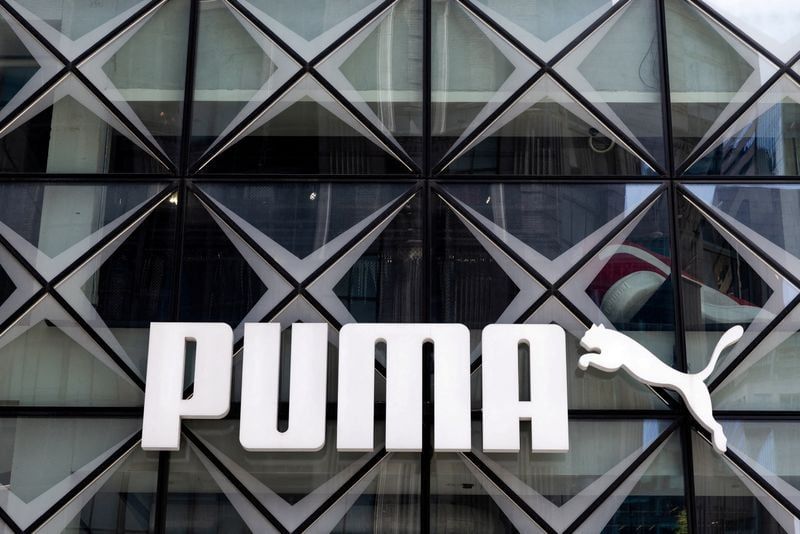
The year 2025 has proven to be a particularly challenging one for Puma SE shareholders, with the German sportswear giant recording what is set to be its worst annual performance on record. While a recent report hinting at a potential takeover offered a brief respite, causing the stock to bounce from its lows, it remains down a staggering 54% year-to-date. Analysts largely foresee little to no recovery for the company's shares over the coming 12 months, painting a bleak picture for investors.
Puma's struggles extend beyond broader industry headwinds, such as the overall slowdown in the sneaker and apparel market and the impact of US tariffs, which have also affected competitor Adidas AG. The Herzogenaurach-based firm faces an array of specific challenges, including the diluting effect of heavy discounting on its brand image and the increasing market share being captured by fast-growing rivals like On Holding AG, New Balance, and Hoka. These newer brands have effectively claimed more shelf space from retailers. As Morningstar analyst David Swartz noted, "Puma has struggled to come out with stuff that stands out in a very competitive market. Other brands have come and really taken a lot of its business away."
The financial outlook for Puma remains concerning, with Bloomberg estimates projecting a 16% drop in revenue for the current year. Compounding these difficulties, these same projections do not anticipate a return to growth for the company before 2027, highlighting the depth of the current financial downturn and the anticipated duration of its recovery period.
Amidst these difficulties, the prospect of a takeover has emerged as a potential lifeline. Following a Bloomberg report suggesting that China's Anta Sports Products Ltd. is among the firms exploring a potential bid, Puma's shares surged by 19% last Thursday, marking its largest gain since 2001. This interest comes after France's billionaire Pinault family, Puma's largest shareholder, had previously sought out potential buyers. However, with the stock trading near its lowest level since 2016, valuation is seen as a significant hurdle for any prospective deal. Felix Dennl, an analyst at Bankhaus Metzler, commented, "With Puma shares down this materially, I think it will be difficult for the Pinault family to agree on an attractive premium with a potential acquirer. As the family is not a majority shareholder, a potential buyer always has the option to accumulate shares in the public market without a premium." Puma has declined to comment on the takeover speculation.
Puma's storied history began in 1948, founded by Rudolf Dassler after a family feud led to his split from his brother Adi, who went on to establish Adidas. This long-standing rivalry persists today, underscored by recent leadership changes. Notably, CEO Bjoern Gulden departed Puma in 2023 to join Adidas, a move that has since seen Adidas shares outperform their counterpart. Puma subsequently appointed Adidas veteran Arthur Hoeld as Gulden’s successor earlier this year, signaling an attempt to leverage past competitor experience.
Under its new CEO, Arthur Hoeld, Puma—known for manufacturing the official football used by the Premier League and producing kits for teams like Manchester City, AC Milan, and Borussia Dortmund—has been actively working to revamp its strategy. Hoeld has pledged to eliminate an additional 900 jobs and re-sharpen the company's focus on its core categories: running, football, and training, aiming to streamline operations and enhance competitiveness in key markets.
Despite these strategic shifts, both traders and analysts remain largely unconvinced that a significant turnaround is imminent. Deutsche Bank AG analyst Adam Cochrane, among the most bearish Bloomberg-tracked analysts, noted last month that "The strategic plan outlined by the CEO was not radical enough" to change investor sentiment, with his €16 ($19) price target implying further downside over the next 12 months. Short interest in Puma has been on the rise since November, and more than two-thirds of Bloomberg-tracked analysts maintain a "hold" rating on the stock. This contrasts sharply with competitors like Deckers Outdoor Corp.’s Hoka brand or Roger Federer-backed On, whose shares recently saw an uptick driven by better-than-expected third-quarter earnings and promising growth prospects.
Unlike Zurich-based On, which commands the industry's highest average prices for its running shoes, Puma has grappled with persistent excess inventory, leading to heavy discounting. This situation not only depresses profit margins but also significantly erodes the brand's perceived value. Morningstar’s Swartz elaborated on this challenge, stating, "If your products are going on sale all the time and are often marked down, then people won’t pay full price for them anymore. It’s very hard to fix once you get into that situation," highlighting the detrimental long-term impact on brand equity and pricing power.