Russia Bets Big on Gold and Yuan as Sanctions Force Currency Pivot
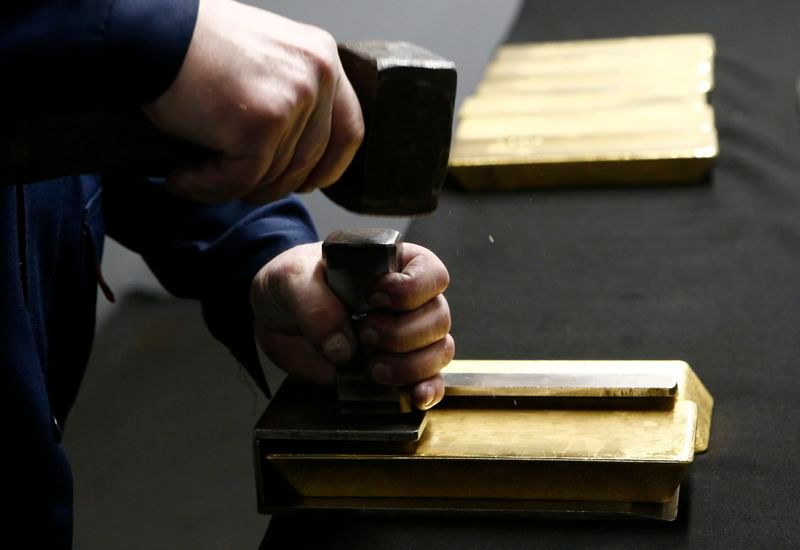
The Russian central bank has significantly escalated its transactions involving gold within the domestic market in recent years. This strategic shift is largely attributed to the improved liquidity of gold, enabling increased sales and purchases intended for the nation's budget reserve, specifically the National Wealth Fund (NWF). This comes amidst a backdrop of Western sanctions that have resulted in the freezing of the central bank's assets held in US dollars, euros, and other major Western currencies.
In response to these geopolitical and economic challenges, Russia implemented a notable change in the currency composition of its fiscal reserves in 2023. The US dollar, euro, and other Western currencies were entirely excluded, with the NWF's currency structure now exclusively comprising China's yuan and gold. These assets are strategically targeted at shares of 60% yuan and 40% gold, respectively, underscoring their designation as liquid assets crucial for the fund's stability and operational flexibility.
The central bank clarifies that the purchase or sale of these liquid currency assets of the NWF for roubles necessitates the central bank conducting equivalent volume operations in the domestic market. This mechanism has been significantly bolstered by the rally in global gold prices, which has spurred a substantial increase in the turnover of gold within the domestic market. This heightened activity has, in turn, allowed the central bank to intensify its gold transactions, though the specific timeframe for this increased volume was not disclosed.
Sanctions have imposed a critical restriction on the central bank, preventing it from acquiring gold in international markets. Despite Russia's position as the world's second-largest gold producer after China, the domestic market's previously limited liquidity had historically constrained the central bank's capacity to scale up its gold operations. However, with the recent enhancement in the liquidity of the domestic gold market, the central bank is now able to conduct equivalent operations not only through the buying and selling of yuan for roubles but also partially through the purchase and sale of gold, diversifying its operational avenues.
As of November 1, the liquid assets held within the NWF, exclusively composed of yuan and gold, reached an aggregate value of $51.6 billion. This amount represents 1.9% of the projected gross domestic product (GDP) and signifies a crucial financial buffer. These assets are designated to be utilized for covering any potential budget deficit, thereby providing fiscal stability to the state.
The NWF is primarily funded by retaining roubles generated from the state budget's excess oil revenues. The management of transactions involving gold and foreign currency for the fund is handled by the central bank. It has been observed that the central bank has been selling foreign exchange and gold on a net basis throughout 2025. These foreign currency and gold holdings, maintained on behalf of the NWF, are integrated into the central bank's broader gold and foreign exchange reserves, which collectively stood at nearly $720 billion, inclusive of the frozen assets, with gold accounting for over 41% of the total.