Sabotage stalls Italy's landmark trial against Chinese fast-fashion gangs.
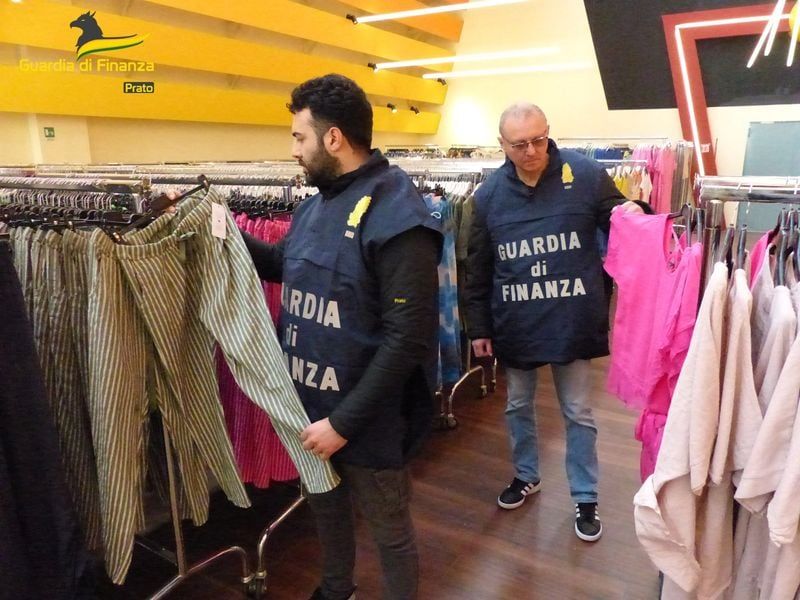
A landmark trial in Italy targeting Chinese crime gangs has been severely hampered by numerous mishaps, including the disappearance of critical documents and the resignation of multiple interpreters. A senior prosecutor suspects the trial is being sabotaged to protect criminals who have established a firm grip on Europe's fast-fashion logistics industry. The case, which was initiated following the brutal murders of two Chinese men in 2010, aims to dismantle an illicit network operating from Prato, Tuscany, that controls the continent's multi-billion-euro garment sector logistics.
Prosecutors contend that the case has become a cautionary example of the obstacles Italy's justice system encounters when confronting international organized crime. They argue that the system lacks the specific legal tools effectively utilized against home-grown mafia groups. Luca Tescaroli, Prato's chief prosecutor and a veteran anti-mafia investigator, stated that interference from both the Chinese community and Chinese authorities in this matter is suspected. China's foreign ministry, in response to Tescaroli's remarks, stated that its government consistently requires overseas Chinese citizens to abide by local laws and regulations.
The trial's difficulties escalated in late September when the latest court interpreter failed to appear for a hearing. Subsequent investigation revealed she had returned to China, leaving transcripts that were "incomprehensible and unusable." This marked the second interpreter to abandon the job, and no other Chinese interpreter in Tuscany has agreed to take over. Tescaroli has launched an investigation into potential sabotage aimed at undermining the trial proceedings.
Despite the trial's goal of curbing violence, the struggle for control over fast-fashion freight and coat hanger production has intensified as the legal process falters. A Reuters tally of official reports indicates at least 16 attacks, including arson and bombings, have occurred in Italy, Spain, and France since April 2024. In one notable incident in July 2024, a Chinese businessman in Prato was stabbed multiple times by a group of six men, including a former soldier, who had flown in from China specifically to "protect, through violence, the business interests of the monopolistic group in the coat-hanger sector." All six individuals were subsequently arrested and sentenced to 7.5 years in jail for attempted murder.
Prato, situated northwest of Florence, serves as Europe's largest textile manufacturing hub. The city hosts over 7,000 textile and garment companies, generating approximately 2.3 billion euros in official annual exports. Over 4,400 of these firms are Chinese-owned, contributing to the city's status as a global fast-fashion production center and a focal point for criminal violence. Nearly a quarter of Prato's residents are foreigners, the highest ratio in Italy, though the actual number of immigrants is likely much higher due to the presence of illegal immigrants without work permits.
The "China Truck" investigation concluded in 2018, alleging that 58 suspects formed a criminal association with "very significant financial means" and "support and resources abroad." However, seven years later, not a single witness or defendant has been called to testify. The alleged mastermind of the network, Zhang Naizhong, described by investigators as a "boss of bosses," was released from pre-trial custody in 2018 and immediately returned to China, making his return to Italy unlikely. Zhang and the other suspects have pleaded not guilty.
The criminal networks operate within what investigators call the "Prato system," which is characterized by corruption, tax evasion, customs fraud, and labor abuses. Companies in this system frequently appear and disappear overnight to avoid taxes and proper contracts for workers, engaging in a "cat-and-mouse game" with authorities. Arturo Gambassi, a union representative for the Sudd Cobas union, noted that firms involved in labor disputes often change their business name within a two-year period. Fabrics are frequently smuggled from China to evade customs duties, while profits are repatriated through illicit money transfer channels, with up to 4 million euros potentially shipped out of Rome's Fiumicino airport each week.
To maintain their competitive advantage in the fast-fashion industry, these companies rely on cheap, round-the-clock labor primarily from China and Pakistan. Workers often face backlash for seeking legal contracts. On November 17, more than 15 Chinese citizens assaulted a union demonstration in Prato, resulting in two plainclothes police officers requiring hospital treatment. The violence has also escalated among competing gangs; in April of this year, Zhang Dayong, Zhang Naizhong's alleged right-hand man, was shot dead in Rome alongside his girlfriend. No arrests have been made in connection with these killings.
Prosecutor Tescaroli and his colleagues are pushing for the courts to legally designate the Chinese gangs as mafia groups under Italian law. This designation would unlock sweeping powers, including asset seizures and stiffer sentences. However, securing this label is challenging in Italy, especially for organizations rooted abroad, making them harder to penetrate than home-grown crime groups like Sicily's Cosa Nostra. The official mafia designation allows courts to infer membership based on conduct, which is crucial when prosecutors must overcome intimidation and silence.
Barbara Sargenti, Italy's national anti-mafia prosecutor, expressed doubts about achieving the mafia designation without sufficient international cooperation. She noted that mapping these organizations requires information from inside sources or assistance from Chinese judicial and police authorities, which has proven "very difficult." China's police and judicial authorities reportedly made contact with Italy's justice ministry recently, expressing willingness to send officers to collaborate, but there has been no follow-up. Currently, Italy has only one Chinese citizen who has turned state witness in a drug-related case. Without the mafia designation or Chinese cooperation, the trial's success remains dependent on fragile Italian procedure and the reliability of interpreters.
Following the unavailability of local interpreters, two new Chinese citizens from Genoa were appointed as translators on November 17. However, court officials remain cautious, as the new translators cannot guarantee they will understand the dialects captured in the crucial phone taps that form key evidence in the case. The next hearing for the trial is scheduled for May 15.