Sea Freight Rates Set to Climb Again Amidst Geopolitical and Green Hurdles
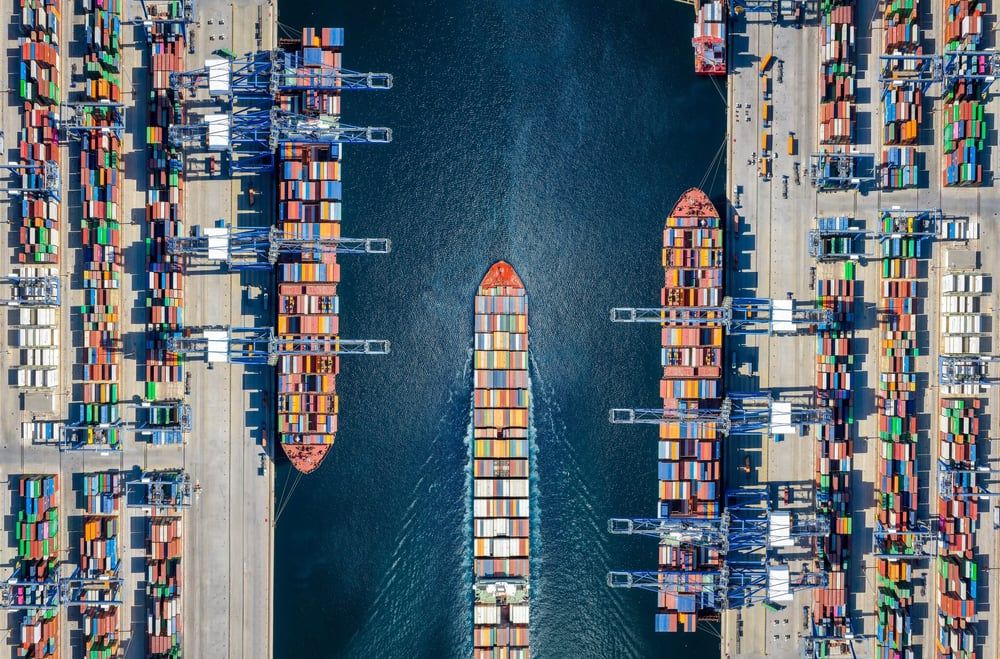
Global sea freight rates are once again poised for an upward trajectory, a warning issued by the United Nations Conference on Trade and Development (UNCTAD). This anticipated rise is attributed to a confluence of factors including persistent political instability, robust container demand, and the urgent need for fleet modernization. The industry, which facilitates the movement of 80% of global goods, also continues to grapple with significant concerns regarding seafarer working conditions.
UNCTAD projects a modest increase in maritime trade, with a growth of just 0.5% by volume and 1.4% for containerized transport in 2025. This marks a notable deceleration following the more substantial increases of 2.2% and 5.9% respectively in 2024, a year largely shaped by the Red Sea crisis where pirate attacks in the Suez Canal region led to a sharp rise in container prices, a situation that remains ongoing. The UN has expressed fears that persistent geopolitical tensions in 2025 could extend their disruptive influence to maritime activity in crucial areas such as the Strait of Hormuz, with persistently high transport costs expected to disproportionately impact developing countries, particularly small island developing states (SIDS) and least developed countries (LDCs).
Further exacerbating cost pressures is the impact of the U.S. trade war with supplier nations, which is driving a reconfiguration of established shipping lanes. The implementation of new U.S. tariffs, alongside tightened port restrictions and customs measures for non-U.S.-built or operated vessels, results in increased rerouting, missed port calls, extended voyages, and ultimately, higher operational costs for shipping companies.
The push for environmental responsibility within the shipping industry is another significant factor contributing to rising expenses. Despite only 8% of the global tonnage currently being equipped for alternative fuels, greenhouse gas emissions from shipping surged by 5% in 2024. This necessitates substantial investments in decarbonization technologies, which are highly likely to be passed on, once again pushing up container prices. The International Maritime Organization’s (IMO) ‘Net Zero Emissions Framework,’ set for consideration in October 2025, aims to establish a global fuel standard and introduce a GHG pricing mechanism from 2028, potentially creating a fund to support developing nations in this transition.
In a related environmental development, the Hong Kong Convention on ship recycling and environmental responsibility is slated to enter into force in June 2025, expected to encompass approximately 90% of the world's fleet. UNCTAD is simultaneously urging ports to assume greater accountability for their operations, advocating for the implementation of simplified digital procedures to prevent bottlenecks, thereby mitigating additional costs and delays throughout the supply chain.
On the human rights front, 2024 registered a record number of seafarer abandonments. The UNCTAD report highlights distressing instances of non-payment of wages, lack of essential provisions like food, water, or fuel, and general abandonment of crews by shipowners. Data from the International Transport Workers’ Federation (ITF) indicates that 3,133 seafarers and 312 ships were affected last year. Looking ahead, an amendment to the Maritime Labour Convention in 2027 will bolster the repatriation and shore leave rights for seafarers stranded in foreign ports, a crucial step for an industry that employs 1.9 million people globally.
Recent market data illustrates the volatility of container prices. Peaks were observed again in June and July, with the Shanghai–New York route reaching $7,285 before settling back to $3,571, according to the Drewry benchmark index. Similarly, the Shanghai–Los Angeles route peaked at $5,914 before easing to $2,561. Shipments from China to Genoa and Rotterdam experienced more contained peaks, now standing at $2,131 and $1,910 per container, respectively.