Shein's Paris Store Opening Sparks Brand Exodus and Financial Crisis at BHV Marais
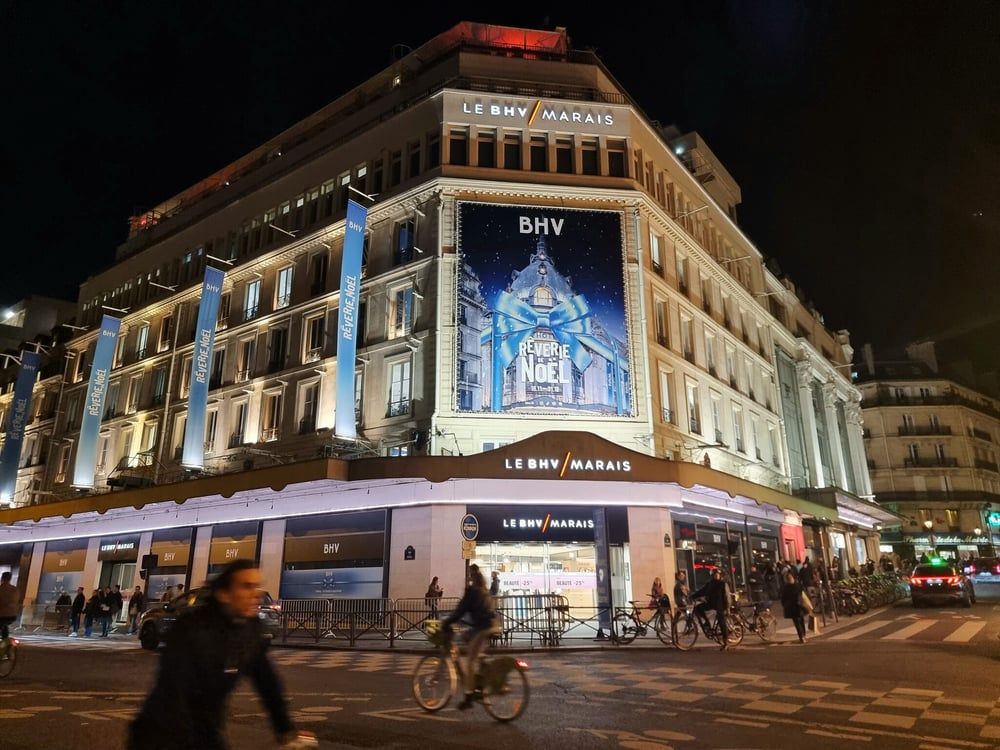
The recent opening of Shein's first permanent brick-and-mortar store on the sixth floor of Paris's BHV Marais department store has sparked significant upheaval and controversy. While BHV's management, Société des Grands Magasins (SGM), celebrated Shein drawing an estimated 50,000 visitors in its first week, and 7,000 on opening day alone, the arrival has triggered a series of unprecedented departures and financial concerns. Initial observations from shoppers highlighted higher prices in-store compared to online, as well as discrepancies between digital and physical product pricing. Internal sources reported an average basket of €50, with first-day takings around €57,000 excluding VAT, though they suggested footfall figures were lower than those announced by management.
The striking visual of Shein's prominent presence quickly contrasted with the exodus of established brands. Just one week after Shein’s launch, luxury accessible brands like Sandro, Maje, and Claudie Pierlot (from the SMCP group) shut their concessions on the first floor, citing a substantial build-up of unpaid invoices. The day prior, LVMH powerhouses Dior, Guerlain, and Francis Kurkdjian also exited the Beauty department for similar reasons. Despite SGM's strategy to use Shein's pulling power to drive traffic to other floors, sales teams reported that the hoped-for "trickle-down" effect had not materialised. Worse, internal sources revealed that last Saturday, the department store's total revenue (excluding Shein and VAT) plummeted to €250,000, a stark contrast to its usual range of €1 million to €1.2 million.
The impact of Shein's arrival, occupying over 1,000 square metres, extends beyond the luxury segment. Over twenty brands have decided to withdraw their products from the Rue de Rivoli store, some explicitly put off by the opening. Among these are Agnès b., Maison Standards, Banana Moon, Armor Lux, Cabaïa, Culture Vintage, Figaret Paris, Le Slip Français, Maison Lejaby, Maison Pechavy, Maison Serge Lesage, Odaje, Polymères, Rive Droite, Talm, Toiles de Mayenne, and cosmetics brands like Aime, Skin&Out, Saint Michel Parfums, and Essentiels Parfums.
However, Shein is not solely responsible for all challenges. A major contributing factor to the widespread departures remains the mounting issue of unpaid invoices, which has plagued relations with many long-standing brands. Employees express grave concerns that the exit of these key players in beauty and fashion will severely penalise business during the crucial end-of-year period, which typically generates around 40% of annual sales. They also fear these closures could trigger a domino effect across other floors. The deteriorating assortment and merchandising, combined with declining customer satisfaction, particularly among Parisian customers with substantial purchasing power, have gradually alienated the store's traditional clientele. Employees voice concern that Shein’s presence is a "test to develop a store focused on low cost," especially given the impending departure of Galeries Lafayette’s own brands like Louis Pion and Jodhpur.
For Frédéric Merlin, president of Société des Grands Magasins, the immediate priority appears to be elsewhere. He reportedly faces a deadline of December 19th to finalise the purchase of the BHV Marais building itself, following the collapse of a previous project with Banque des Territoires. According to reports, Merlin is actively pursuing his ambition by approaching US and UK pension funds, indicating a complex financial landscape underpinning the department store's turbulent present.