Southern Africa's Diamond Economies Face Crisis as Lab-Grown Stones Rise
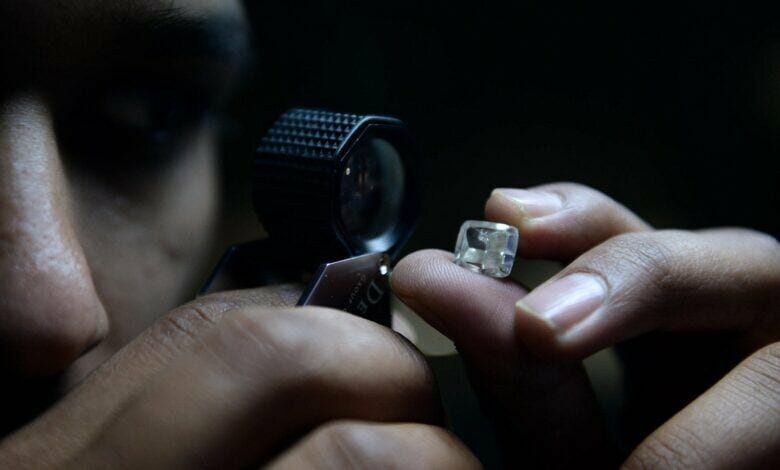
Southern African nations, including Botswana, Angola, Namibia, and South Africa, which have historically built significant prosperity on the diamond trade, are now facing an urgent economic challenge. The rapid rise of cheaper, lab-grown diamonds is threatening their economies, pushing them to scramble for viable alternatives to their traditional revenue streams.
Botswana, the most diamond-dependent country in the region, is at the forefront of this crisis. Diamonds account for approximately 30 percent of its Gross Domestic Product (GDP) and a staggering 80 percent of its exports, according to the International Monetary Fund. The country, transformed from poverty by diamond discoveries in the 1960s, is acutely feeling the effects as consumers increasingly turn to more affordable lab-grown stones, predominantly from China and India. This shift has caused the average price of a one-carat natural diamond to plummet from a peak of $6,819 in May 2022 to $4,997 by December 2024, as reported by the World Diamond Council. The economic fallout for Botswana is severe, with foreign reserves depleting, the government resorting to debt, and the health system teetering on the verge of collapse, leading President Duma Boko to declare a state of emergency. Global ratings agency S&P recently downgraded Botswana's long-term ratings to "BBB" with a negative outlook, citing the rapid expansion of the lab-diamond market, which captured about 20 percent of the global market by value and up to 50 percent by volume in the US engagement ring segment by 2025.
Recognizing the profound risk, Botswana is proactively pursuing an aggressive diversification strategy, deemed "essentially now or never" by economist Brendon Verster. This week, the nation launched a sovereign wealth fund to lay the "foundation for a more resilient, sustainable and diversified future beyond diamonds." Beyond this, Botswana is exploring other avenues, including boosting luxury wildlife tourism, entering the burgeoning medicinal cannabis market, and harnessing its abundant sunshine for solar power. President Boko has even floated the audacious idea of taking a majority stake in industry giant De Beers, potentially allowing Botswana to sell its diamonds independently on the global market.
The economic tremors are not confined to Botswana alone; other Southern African peers are also exposed, though to varying degrees. Tiny Lesotho, where diamonds contribute up to 10 percent of its $2 billion GDP, is particularly vulnerable, further compounded by US tariffs impacting its vital textile market. The country's largest diamond mine, Letseng, announced layoffs for a fifth of its workforce, citing "sustained pricing pressure" and "softer demand." Independent economic analyst Thabo Qhesi warned that such mine closures could "heighten risks of economic collapse," underscoring the urgent need for Lesotho to explore alternatives such as its rare-earth resources.
In response to the shifting market dynamics, a collective effort is underway to preserve the value of natural diamonds. Angola, Botswana, Namibia, South Africa, and the Democratic Republic of Congo pledged in June to allocate one percent of their annual diamond revenues to a marketing campaign aimed at reframing natural diamonds as a coveted "luxury product." De Beers, a key industry player, is actively participating, highlighting the story of "responsibly sourced diamonds from Botswana." Simultaneously, De Beers is exploring the potential of synthetic diamonds in high-tech applications like quantum networks and semiconductors, especially as the price of lab-grown stones falls below $100 per carat. This dual approach underscores the evolving market, with Botswanan Ministry of Minerals official Jacob Thamage suggesting that natural and lab-made diamonds "offer different value propositions to different consumers and therefore can and will coexist," a sentiment echoed in the retail market where high-value natural diamonds and accessible lab-grown stones cater to distinct segments.
The profound shift in the global diamond market presents an existential challenge for Southern African economies that have long relied on their geological bounty. The imperative for diversification and economic restructuring is undeniable, pushing nations like Botswana to innovate and adapt swiftly to ensure a sustainable and resilient future beyond the sparkle of natural diamonds.