Tariff Cut Offers Breathing Room But China US Trade Diversification Is The New Normal
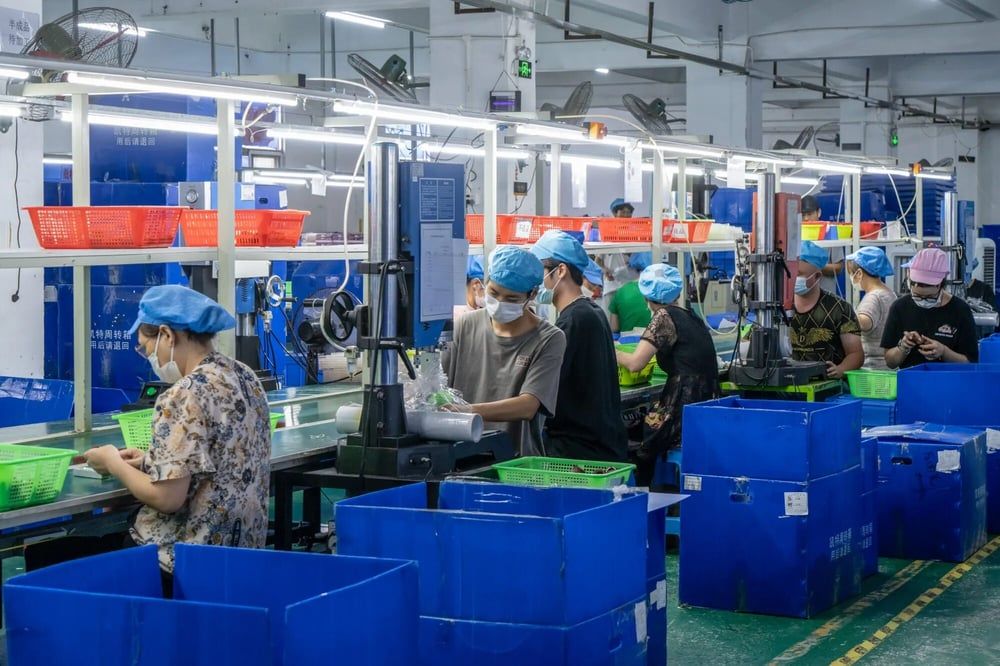
Following a recent summit between US and Chinese leaders, Chinese exporters have expressed a cautious optimism due to the announced reduction in US tariffs. The levies on Chinese imports are set to decrease from 57% to 47%, a significant drop from a previously threatened 157% rate. This development offers a degree of immediate relief, buying manufacturers "more time" and fostering expectations of improved deals with American clients, particularly given China's established manufacturing ecosystem and skilled workforce, which often make its production more competitive than that of other Asian nations despite higher tariff rates.
However, this trade détente does not signal a return to the status quo. Both US buyers and Chinese sellers have learned critical lessons from past trade tensions, recognizing that the risks of exclusive reliance on China for production or solely on the US market for exports now outweigh China's historical edge as a low-cost manufacturing hub. While there's an immediate uplift in sentiment, US retailers are largely expected to continue with plans to diversify their supply chains away from China, and Chinese manufacturers remain committed to expanding into other global markets to mitigate future vulnerabilities.
For Chinese businesses, the imperative to reduce dependence on the US market is a long-term strategy. Huang Lun, a sales manager for a Guangzhou-based online retailer, exemplifies this shift. Despite American buyers accounting for 80% of his company's sales last year, his firm's strategic goal is to drastically cut that reliance to just 20% by cultivating growth in other regions. He underscores that such diversification is "the only way to reduce trade risks for the long term," illustrating a profound shift in market approach that prioritizes stability over single-market dominance.
On the other side of the Pacific, US buyers are similarly re-evaluating their sourcing strategies. Many are now actively urging suppliers to establish manufacturing operations outside of China, even if this entails higher initial costs and potentially reduced efficiencies. This push reflects a desire to de-risk supply chains and build resilience against future geopolitical or economic disruptions, acknowledging that sole reliance on Chinese production carries substantial strategic vulnerabilities.
Concrete steps towards this diversification are already in motion. Lin Qian, who operates toy factories in both Shenzhen, China, and Vietnam, notes that while his Chinese facilities will handle the bulk of US orders in the near term, a longer-term shift is undeniable. His US clients, whose orders represent three-quarters of his revenue, explicitly threatened to cease placing orders unless he moved more production to Vietnam. Establishing new facilities, like Lin's delayed Vietnamese plant, presents clear challenges and forces businesses "to leave our comfort zone," yet it is deemed a "non-negotiable" part of securing future business.
This dual-production model is becoming a new standard for many Chinese exporters. Barry Shan, whose company produces holiday ornaments for Walmart Inc. in China, is expanding operations to a new plant in Cambodia. He highlights that having factories both domestically and abroad provides a crucial "sense of security," alleviating fears of "ups and downs in tariff rates." This strategy allows companies to maintain competitiveness by offering flexibility and stability to international clients.
Indeed, this trend is reshaping global trade flows. China's trade data already reflects this diversification, with robust shipments to Europe, Africa, and other parts of Asia helping to offset any slowdown in exports to the US, contributing to a projected record trade surplus this year. As freight forwarder Keven Chen articulates, "Everybody is diversifying." It has become an "industry consensus" that neither the US market can solely depend on China's supply chain nor Chinese manufacturers exclusively on the US market. The complex and often "tricky" China-US relationship mandates that diversification is not just an option, but an essential, permanent strategy for all parties involved.