Trump Tariffs Hit Lesotho's Textile Industry Hard
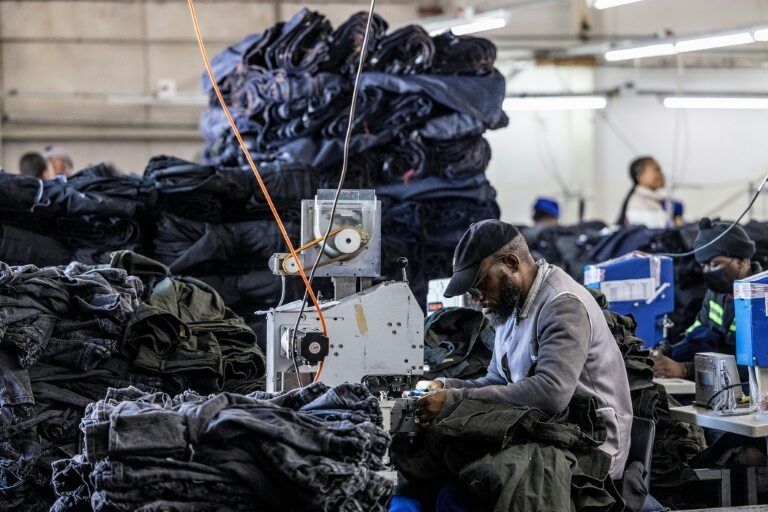
The southern African mountain kingdom of Lesotho, one of the world’s poorest nations, is currently grappling with the severe repercussions of a tariff regime introduced by former US President Donald Trump. This policy shift has dealt a significant blow to the country's vital textile industry, a sector that previously stood out as a rare economic success story, particularly in denim manufacturing. The adverse impact has further intensified already high unemployment rates across the landlocked nation.
Initially, the US imposed a substantial 50% levy on imports from Lesotho, marking it as one of the highest tariffs globally. While this duty was subsequently reduced to 15% in August, it still significantly exceeds the tariffs applied to Lesotho's competitors, such as Kenya. This disparity has led to a notable decline in orders for Lesotho's factories, prompting several to eliminate jobs. Prime Minister Sam Matekane confirmed ongoing negotiations with the US government for a further reduction, ideally to 10% or even a return to the pre-tariff zero-duty status. He stressed that the current tariffs place Lesotho at a distinct disadvantage, encouraging businesses to consider relocating to countries with more favorable trade policies.
With a population of approximately 2.3 million, Lesotho's economy relies heavily on its textile industry. This sector directly employs 12,000 individuals and indirectly supports an additional 40,000 jobs, manufacturing goods for major US retailers including Walmart Inc., JC Penney, and Levi Strauss & Co. Prior to the introduction of these tariffs, the majority of Lesotho's exports to the US—its second-largest trade partner—entered the country duty-free under the now-defunct African Growth and Opportunity Act (AGOA).
The economic outlook for Lesotho has drastically shifted as a direct result of these trade policies. Before the tariffs, the country's central bank had projected modest expansion in textile and clothing manufacturing for the current and upcoming years. However, the new forecast predicts sharp contractions of 9.9% and 13.3%, respectively. Trump’s tariff methodology was based on countries’ trade balances with the US; last year, Lesotho's exports to the US exceeded $235 million, while its imports from the US were less than $3 million.
Teboho Kobeli, founder of Lesotho-based Afri-Expo Textiles, described the tariffs as a "major shock," likening their impact to that of the coronavirus pandemic. Despite the severe challenges, Kobeli also views Trump's targeting of Lesotho as a "wake-up call," presenting an unexpected opportunity to re-evaluate and transform the nation's economic operational strategies. With unemployment already standing at a staggering 30% last year—among the highest worldwide—Kobeli offered a surprising perspective, stating, "I would say ‘Thank you, President Trump, for making Lesotho known.’ For the president of a powerful country like the US to mention Lesotho in his Congress is, you know, a powerful marketing tool."