Trump’s Tariffs Trigger Global Trade Chaos and Unexpected Economic Shifts
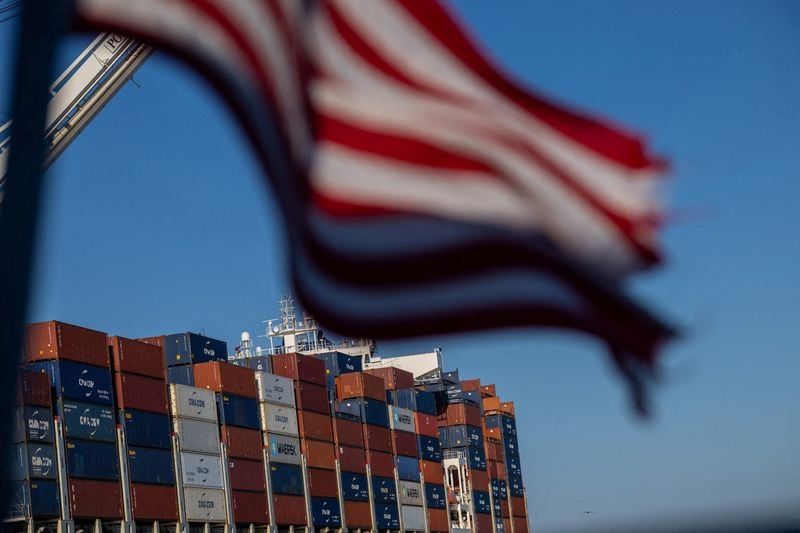
Donald Trump’s return to the White House in 2025 initiated a period of significant upheaval in global trade, characterized by a surge in tariffs imposed on U.S. trading partners. These tariffs, reaching levels not seen since the Great Depression, sent ripples through financial markets and triggered a series of negotiations concerning trade and investment agreements.
The impact of these trade policies, and the global response to them, is expected to remain a central issue in 2026, though facing considerable hurdles. Trump’s actions, intended to revitalize the U.S. manufacturing sector, increased the average tariff rate to nearly 17% – a substantial rise from the less than 3% rate at the close of 2024. This resulted in approximately $30 billion in monthly revenue for the U.S. Treasury.
The tariffs prompted leaders from around the world to seek agreements with Washington for reduced rates, often accompanied by commitments of substantial U.S. investments. While framework deals were established with major trading partners like the European Union, the United Kingdom, Switzerland, Japan, South Korea, and Vietnam, a comprehensive agreement with China remains elusive despite multiple rounds of talks and a direct meeting between Trump and Chinese President Xi Jinping.
The EU’s agreement, involving a 15% tariff on its exports and a non-specific pledge of U.S. investment, drew criticism, with some, like France’s Prime Minister Francois Bayrou, labeling it a “submission” and a “sombre day” for the bloc. Others viewed it as the most favorable outcome achievable under the circumstances. Despite initial concerns, European exporters and economies have largely adapted to the new tariff rates, benefiting from exemptions and the discovery of alternative markets.
Surprisingly, China’s trade surplus exceeded $1 trillion, defying expectations of a decline due to the tariffs. This success was attributed to diversification away from the U.S. market, advancements in its manufacturing sector, and leveraging its dominance in rare earth minerals – vital components for Western security – to resist pressure from the U.S. and Europe to reduce its surplus.
Contrary to widespread predictions from economists, the anticipated economic disaster and surge in inflation did not materialize. The U.S. economy experienced a brief contraction in the first quarter due to pre-tariff import surges, but quickly recovered, fueled by a significant boom in artificial intelligence investment and robust consumer spending. The International Monetary Fund even revised its global growth outlook upward twice following Trump’s “Liberation Day” tariff announcement in April, as uncertainty diminished and agreements were reached.
While U.S. inflation remains somewhat elevated, partly due to the tariffs, economists and policymakers now anticipate a milder and shorter-lived impact than initially feared, with the cost of import taxes being distributed across the supply chain among producers, importers, retailers, and consumers.
A key uncertainty for 2026 lies in the fate of Trump’s tariffs. A legal challenge to the basis of his “reciprocal” tariffs and levies linked to fentanyl flows from China, Canada, and Mexico was presented to the U.S. Supreme Court in late 2025, with a decision expected in early 2026. The Trump administration maintains it can utilize alternative legal authorities to maintain the tariffs, but these are more complex and limited in scope, potentially leading to renegotiations or increased uncertainty if the administration loses its case.
For Europe, the evolving relationship with China is equally crucial. The depreciation of the yuan and the advancement of Chinese companies up the value chain have benefited Chinese exporters, while European firms have struggled to gain traction in the slowing Chinese market. A key question for 2026 is whether Europe will implement tariffs or other measures to address the growing trade imbalances with China.
Efforts to finalize a U.S.-China trade deal are also paramount. A tentative agreement reached earlier will expire in the latter half of 2026, and Trump and Xi are scheduled to meet twice during the year. Furthermore, the free trade agreement with Canada and Mexico is up for review, raising questions about whether Trump will allow it to expire or seek revisions.
Chris Iggo, chief investment officer for Core Investments and chair of the Investment Institute at AXA Investment Managers, noted a potential shift in the administration’s approach, suggesting a softening of its stance on tariffs to alleviate inflationary pressures. He believes this could be marginally beneficial for the inflation outlook and less concerning for markets. He also emphasized that a trade deal with China would be politically and economically advantageous for the U.S., particularly ahead of midterm elections.