Zalando's Paris Summit: Navigating Fashion's Future Amidst Market Shifts and Ultra-Fast Fashion Challenges
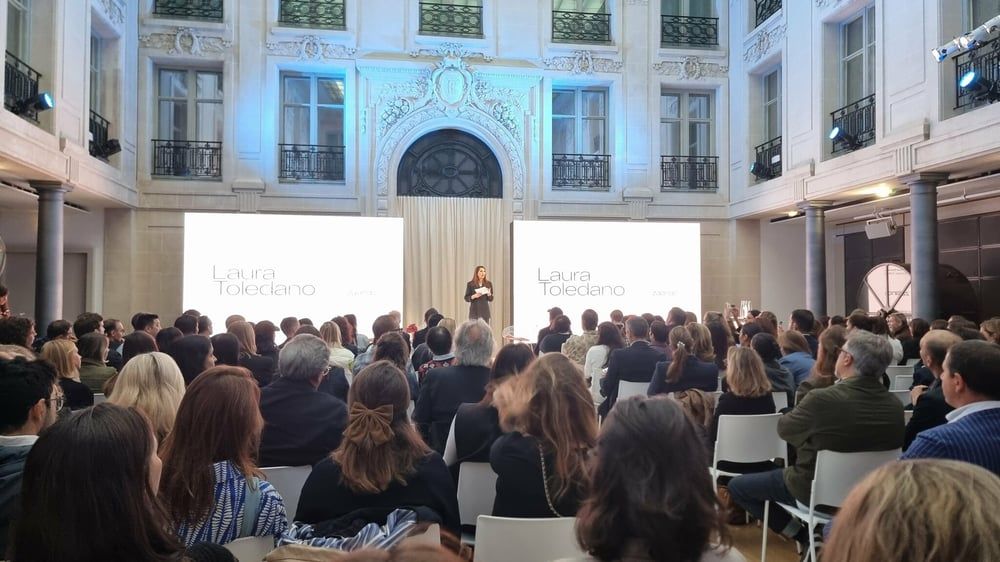
Zalando recently hosted its "Partners Day" in Paris, an significant gathering that convened 280 executives and representatives from French brands and partners operating on the platform. Held under the vibrant glass roof and gilded interiors of the Hôtel d'Évreux, the event served as a crucial forum for assessing the state of online apparel sales in France and discussing overarching trends across the fashion spectrum, from luxury to budget segments. Attendees included a diverse cross-section of the French apparel and beauty industries, alongside online sales specialists and trade federation representatives. While the morning featured insightful experience-sharing sessions from brands like Salomon, Soeur, and Kendo Paris, the robust market analyses provided elevated the event to the status of an industry summit, underscoring Zalando's deep commitment to the sector.
David Schneider, Zalando’s co-founder, who traveled from Berlin for the occasion, articulated the company's forward-looking vision. He emphasized the ongoing need to develop synergies within their infrastructure and prioritize investment in the customer experience. Schneider highlighted a belief that "a new era is dawning for fashion retail," anticipating a significantly transformed customer experience in the coming years. Zalando's ambition, he stated, is to actively shape this evolving landscape, recognizing the emergence of numerous innovations and the extensive frontiers yet to be explored in the industry.
Insights presented by Guillaume Coudry, NielsenIQ’s e-commerce manager for Western Europe, provided a detailed picture of the French online market. This year, online fashion sales in France saw a 6% increase in volume. Other sectors also demonstrated strong growth, with sport up by 10%, beauty by 5%, and designer apparel by 6%. While the average basket value dipped to €48, this was notably compensated by an increase in purchase frequency, now averaging 8.2 transactions per year. Coudry further noted that marketplaces continue to expand their market share in online fashion, while direct-to-consumer models are losing ground, posing a strategic repositioning challenge for brands.
A new and rapidly emerging player in the e-commerce landscape, TikTok Shop, was also flagged by Guillaume Coudry as one to watch closely. Despite its current limited presence in France, he described it as a "real breakthrough for commerce," where inspiration and purchase seamlessly converge. This phenomenon, he warned, is gaining massive momentum globally. Currently, Puma stands out as the sole clothing brand to secure a spot among the Top 30 best-selling brands on the Chinese social network, highlighting its unique position in this burgeoning commercial channel.
Xavier Romatet, managing director of the Institut Français de la Mode (IFM), delved into the significant challenges facing the luxury sector. He identified a slowdown in two traditionally dominant markets—China and the United States—as a primary concern. Furthermore, he highlighted issues tied to price trends, noting that an astonishing 80% of post-Covid sales growth in luxury has been attributed to price increases. Romatet questioned the underlying "desirability" that would compel a customer to pay €3,500 for a product that previously retailed for €3,000. He proposed that the two key levers for maintaining desirability are creativity, currently stimulated by recent reshuffles of creative directors, and quality, as consumers expect expensive items to possess lasting durability. Beyond economic factors, Romatet also underscored decisive social issues for the sector's future, including social and environmental responsibility, the impact of technology—especially artificial intelligence—on the value chain, and an evolving relationship with ownership and possession, which will make the brand experience increasingly central. He concluded that while the problems are clearly identified, the definitive solutions are yet to be fully devised.
This analysis of the luxury sector resonated with observations from the NellyRodi agency, whose director, Pierre-François Le Louët, pointed to an increasingly polarized market. He highlighted a widening gap between entry-level and top-end products, largely driven by the influence of Chinese player Shein, which is actively pushing entry-level prices down. While the future of the fast-fashion bill, which has drawn criticism from the European Commission, remains uncertain, Le Louët noted that the finance bill presented on October 15 proposes a €2 tax on small non-European parcels, which are currently tax-exempt. He cautioned that brands underestimating Shein's impact are gravely mistaken, asserting that "Shein is imposing a new way of behaving and shopping online, and setting new benchmarks in terms of technology, pace, communication, pricing and consumers’ mindset." Paradoxically, this polarization could offer a slight reprieve for various price tiers that prioritize understanding the customer and investing in brand experience. He even made a passing reference to Shein's imminent arrival at BHV, satirically likening the department store to an "extremely empty department store under Brezhnev."
The discussion also touched upon the broader European response to the ultra-fast fashion phenomenon. Le Louët expressed satisfaction that a "small French initiative" has successfully triggered a wave of similar European actions. He cited measures being taken by Italy, Sweden, and Portugal, confirming that the European Commission is gradually escalating its engagement with the issue. This reflects a growing consensus and coordinated effort among European federations to address the challenges posed by ultra-fast fashion, coming just weeks after a significant agreement against it was signed by various European bodies.